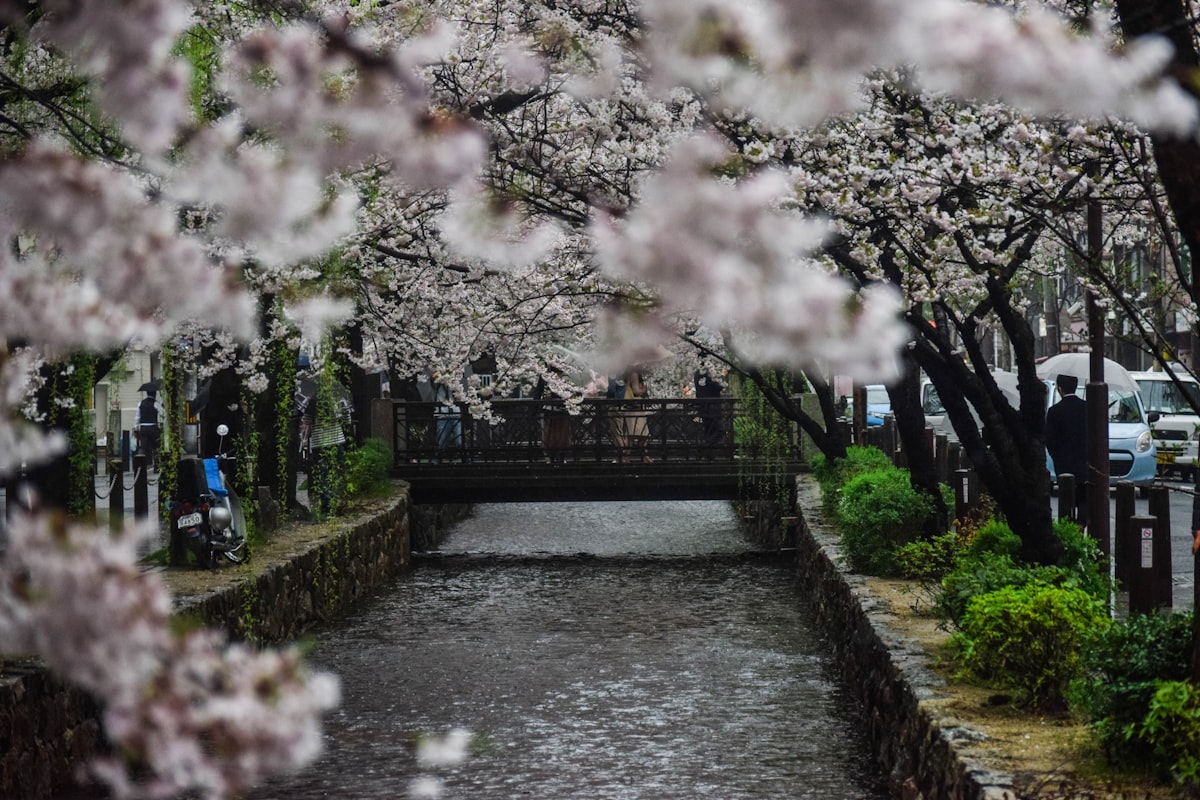
Japan's cherry blossom viewing season looks like one of the country's most timeless traditions. But hanami — literally 'flower viewing' — didn't start with cherry blossoms at all, and it took centuries at the Imperial Court for the practice to switch trees entirely.
Borrowed From China, Focused on Plums
Hanami's roots trace to a Chinese custom of viewing plum (ume) blossoms while drinking and composing poetry. Japan adopted this during the Nara period (710-794), and when the practice is said to have begun, it was plum blossoms — not cherry blossoms — that people gathered to admire.
The Shift to Sakura
By the Heian period (794-1185), cherry blossoms had overtaken plum blossoms as hanami's focus. The historical chronicle Nihon Kōki records the first documented sakura viewing in the year 812, and Emperor Saga is credited with formalizing the practice, holding flower-viewing parties with sake and feasts beneath blossoming cherry trees in the Imperial Court at Kyoto — the moment most historians point to as hanami's true origin in the form recognizable today.
Why Cherry Blossoms, Specifically
The appeal wasn't just aesthetic. Poets at these Heian court gatherings wrote verse treating the blossoms as a direct metaphor for life itself — luminous and beautiful, yet gone within days. That idea, later crystallized in the concept of mono no aware ('the pathos of things'), gave cherry blossoms a philosophical weight plum blossoms never quite carried in the same way, and it's arguably why sakura, not ume, became the tradition's permanent symbol.
From the Imperial Court to Everyone
Hanami stayed a court-exclusive practice for centuries before spreading to samurai society, and then, by the Edo period (1603-1868), to ordinary townspeople — the point at which it became something close to the nationwide, egalitarian spring ritual it remains today, with parks across the country filling each spring with blue tarps, packed lunches and drinking parties under blossoming trees.
Frequently Asked Questions
Did hanami always mean cherry blossom viewing?
No — it originally meant plum blossom viewing during Japan's Nara period, before shifting to cherry blossoms by the Heian period.
Who is credited with starting formal cherry blossom hanami?
Emperor Saga of the Heian court, who held sake-and-poetry flower-viewing parties beneath cherry trees in Kyoto, following the first documented sakura bloom recorded in 812.
What is mono no aware?
A Japanese aesthetic concept roughly meaning 'the pathos of things' — an awareness of the bittersweet beauty in life's impermanence, closely associated with how cherry blossoms are understood culturally.

Travel Guides Finder Editorial Team
Editorial Team
Articles on Travel Guides Finder are researched and written by our small editorial team. We check dates, prices and entry rules against official sources such as tourism boards, event organisers and government travel advice, and we update guides when those sources change. If you spot an error, please let us know through our contact page.