

Brazil is not a destination so much as a continent wearing one flag. It covers nearly half of South America, borders every country on the continent except Chile and Ecuador, and contains ecosystems that have almost nothing to do with one another — a rainforest the size of Western Europe, the world's largest tropical wetland, 7,400 kilometres of coastline, a highland savannah, and the megacities of the southeast. The single most common planning mistake is treating it like one trip.
The second most common mistake is more expensive, and it is the reason this guide leads with paperwork rather than beaches. If you hold a US, Canadian or Australian passport, you now need a visa to enter Brazil — and a large share of the travel advice still online was written before that changed. People are turning up at check-in desks and being denied boarding over it.
The eVisa rule, current as of this guide
Since 10 April 2025, holders of US, Canadian and Australian passports require an approved eVisa to enter Brazil — for tourism, for business, and even to transit through a Brazilian airport. It costs roughly US$80.90, is issued as a multiple-entry visa valid for 10 years, and permits stays of up to 90 days per visit and 180 days in any 12-month period. Approval is often returned within 48 to 72 hours but can take up to 10 business days, so apply two to three weeks before you fly. Your passport needs at least six months' validity beyond your departure date and one completely blank page. Most European passport holders, including UK citizens, remain visa-exempt — but check your own nationality on an official source rather than trusting a blog, including this one.
Brazil reinstated the requirement on the principle of reciprocity: those three countries require visas of Brazilians, so Brazil now requires the same in return. It is not a temporary measure and there is no visa-on-arrival fallback. With that handled, the rest of this guide is about the genuinely hard question — which Brazil are you actually going to?
First, Understand the Scale
Maps flatten this badly. Brazil is larger than the contiguous United States and almost as wide as it is tall. Travellers routinely sketch out an itinerary that pairs Rio with the Amazon and Iguaçu Falls across ten days, not realising that each of those legs is a multi-hour flight, and that the internal distances are closer to intercontinental than regional.
| Route | Straight-line Distance | Flight Time | Practical Note |
|---|---|---|---|
| Rio de Janeiro → Iguaçu Falls | ~1,180 km | ~2h 15m direct | The easiest add-on to a Rio trip; frequent direct flights |
| Rio de Janeiro → Manaus (Amazon) | ~2,840 km | ~4h direct | Roughly London to Cairo; served by frequent direct flights |
| Iguaçu Falls → Manaus | ~2,630 km | ~7h 30m with a connection | Almost always requires backtracking through São Paulo |
| Rio de Janeiro → Salvador (Bahia) | ~1,200 km | ~2h direct | The gateway to the Northeast coast |
| Rio de Janeiro → Pantanal (via Cuiabá) | ~1,600 km | ~2h 30m plus a long road transfer | Budget a full travel day each way |
The rule that follows from this table is simple: pick two regions for a two-week trip, three at the absolute outside, and accept that you are not seeing the rest this time. Trying to do more means spending your holiday in departure lounges.
The Six Brazils: Which One Are You Going For?
Each of these regions rewards a different kind of traveller and each has a different best season. Read them as alternatives rather than as a checklist.
1. Rio de Janeiro and the Southeast
The Brazil of the imagination: a city wedged between granite peaks and the Atlantic, where the beach is a civic institution rather than an attraction. Copacabana and Ipanema are functioning neighbourhoods with beach culture threaded through daily life — football, volleyball, vendors, sunset applause at Arpoador. Above it all, Christ the Redeemer on Corcovado and the cable car up Sugarloaf deliver the views that justify the queues. São Paulo, six hours' drive southwest, is the counterweight: no beaches, enormous, and home to the best restaurant scene and nightlife in South America. Best from roughly December to March if you want beach heat, or May to September for cooler, drier, less crowded sightseeing.
2. Iguaçu Falls
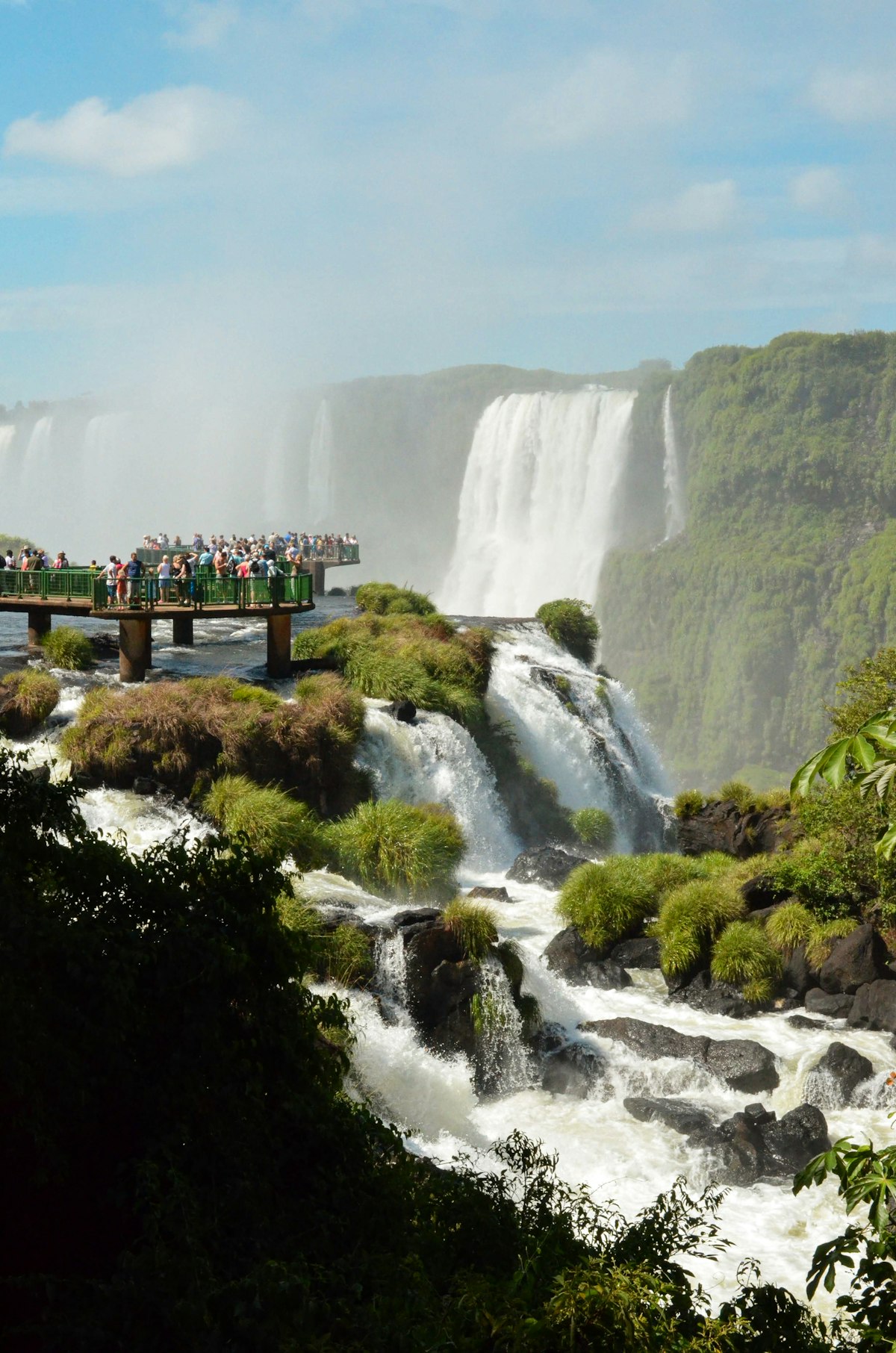
Not a waterfall but a two-and-a-half kilometre wall of them — roughly 275 separate cascades on the Argentine border, arranged in a horseshoe so large that the Brazilian and Argentine sides offer completely different experiences. Brazil gives you the panorama; Argentina puts you on walkways directly above the Devil's Throat. Do both, which means crossing the border and budgeting at least two full days. May to September is cooler and drier, with August typically the clearest month, while April and December bring the heaviest water flow.
3. The Amazon
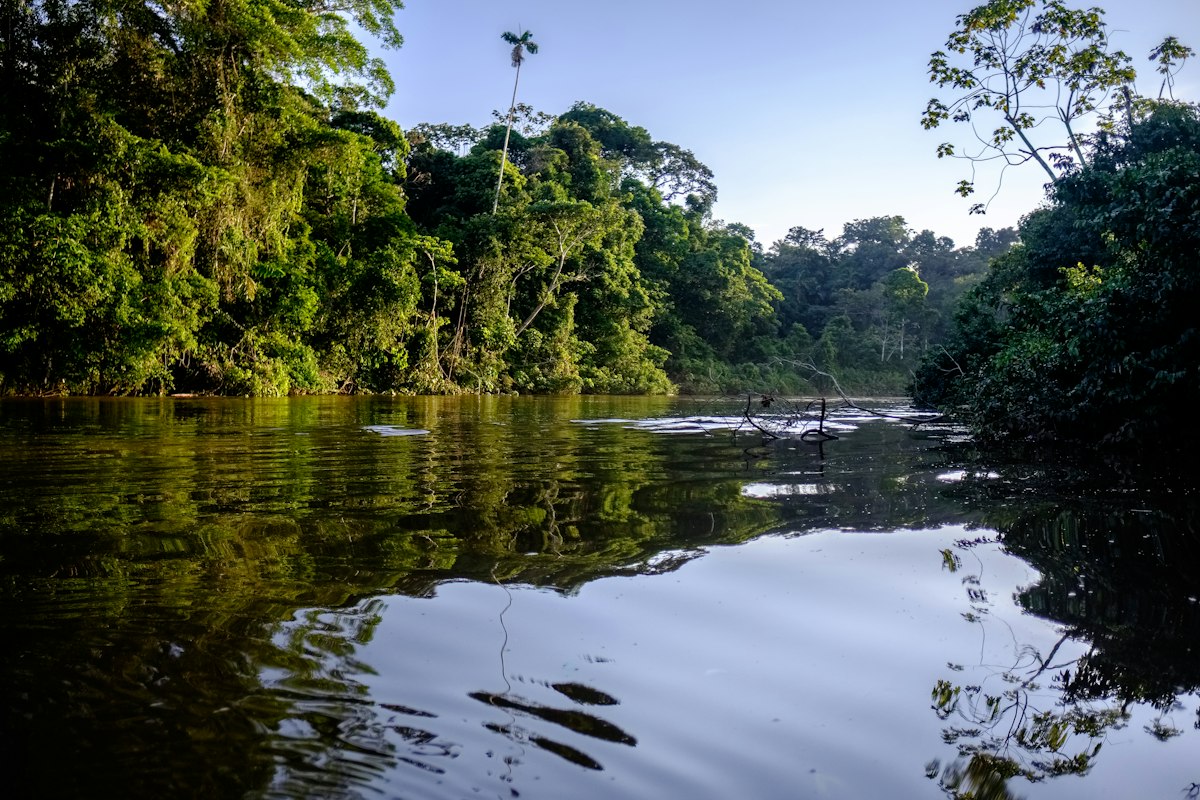
Most visitors reach it through Manaus, a city of two million improbably embedded in the rainforest, with an opera house built at the height of the rubber boom. From there you travel by boat to a jungle lodge, and the quality of the experience correlates almost entirely with how far you go — the wildlife within easy reach of the city has long since learned to avoid people. Set expectations honestly: this is not a safari. You will see extraordinary birds, pink river dolphins, caimans and monkeys, but the rainforest hides its mammals. The dry season, roughly May to October, means lower water, more walking trails and fewer mosquitoes.
4. The Pantanal
If you want to actually see animals, this is where you go — and it is the single most under-appreciated decision in Brazilian travel planning. The Pantanal is the world's largest tropical wetland, an open floodplain rather than dense forest, which means wildlife is visible instead of hidden. It offers the best jaguar sighting odds anywhere on earth, along with giant otters, capybaras, caimans in absurd numbers and hyacinth macaws. The dry season runs April to November, and July to October is the window when receding water concentrates animals around the remaining rivers and lagoons.
5. Salvador and Bahia
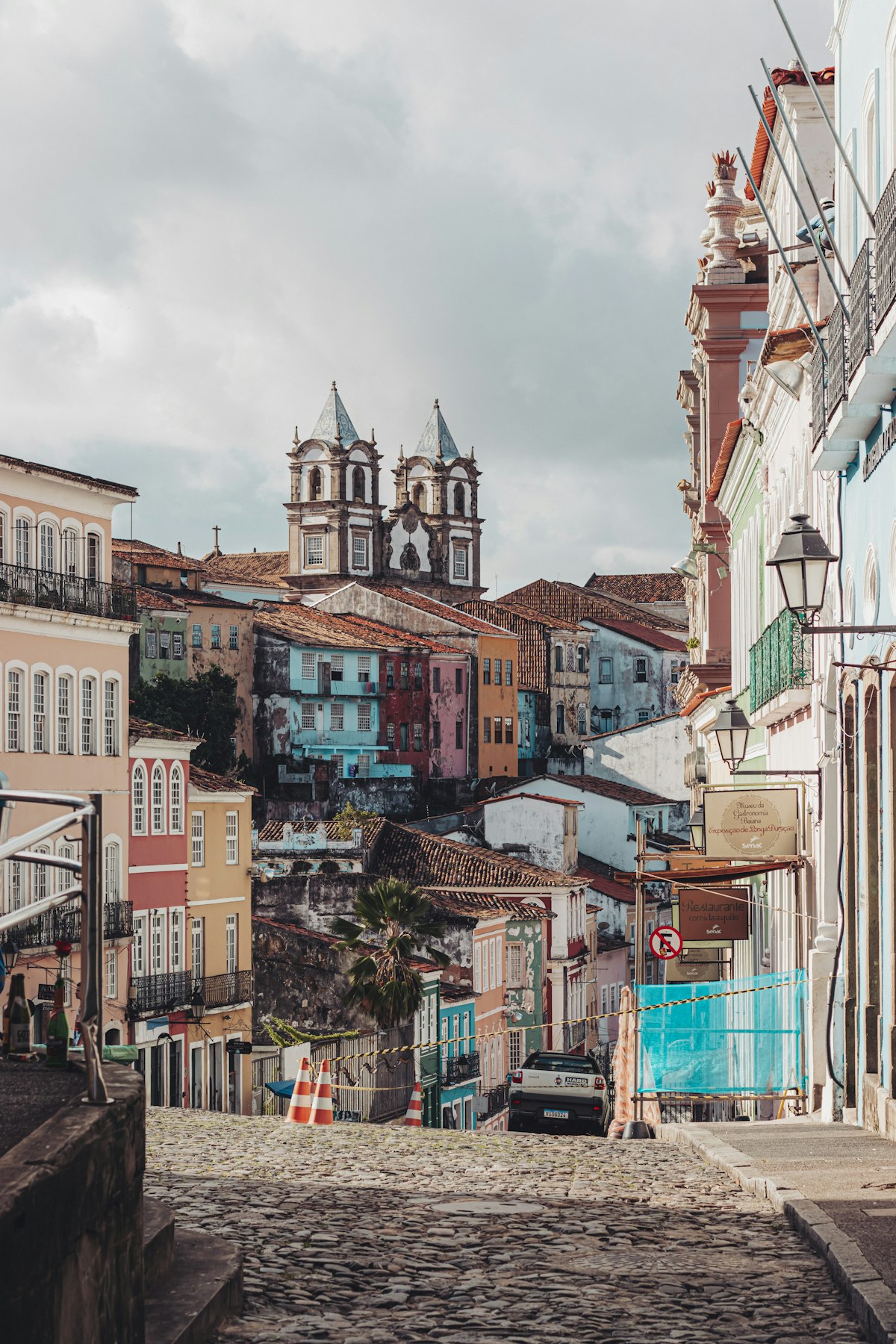
The cultural heart of Afro-Brazilian Brazil and, for many visitors, the most memorable region in the country. Salvador was the colonial capital and the main port of the Atlantic slave trade, and the culture that emerged from that history — Candomblé, capoeira, the percussion-driven music, the dendê-oil cooking that tastes like nowhere else in Brazil — is the reason to come. The Pelourinho old town is a UNESCO site of pastel colonial buildings on steep cobbled streets. Beyond the city, the Bahian coast runs to beach towns like Itacaré and the peninsula around Morro de São Paulo.
6. The Northeast Coast
Thousands of kilometres of warm-water coastline stretching north and west from Bahia, with the best and most consistent beach weather in the country. Highlights include Jericoacoara, a former fishing village reached across sand dunes, the surreal seasonal lagoons of Lençóis Maranhenses, the reef pools at Porto de Galinhas, and Fernando de Noronha — a protected volcanic archipelago with visitor caps and environmental fees that has some of the finest diving in the South Atlantic. The dry season here runs roughly September to February, which is conveniently the inverse of the Amazon and Pantanal.
Matching the Region to the Traveller
| If you want... | Go to | Best months | Minimum days |
|---|---|---|---|
| City energy, beaches and the iconic views | Rio and the Southeast | Dec–Mar (hot) or May–Sep (mild) | 4–5 |
| One overwhelming natural spectacle | Iguaçu Falls | May–Sep, clearest in Aug | 2–3 |
| Rainforest immersion and river life | The Amazon (via Manaus) | May–Oct | 4–5 |
| Genuine wildlife viewing and jaguars | The Pantanal | Jul–Oct | 4–5 |
| Music, history and Afro-Brazilian culture | Salvador and Bahia | Sep–Mar | 3–4 |
| Beach time with reliable sun | The Northeast Coast | Sep–Feb | 5–7 |
If You Are Coming for Carnival
Carnival moves with the church calendar, and in 2027 it falls unusually early: 5 to 13 February. Rio's Sambadrome parades are the televised spectacle, with the top-division samba schools competing on the nights of 7, 8 and 9 February and a champions' parade closing things on the 13th. But the free street parties — the blocos — are what most Brazilians mean by Carnival, and they run across the whole city for well over a week without a ticket or a plan.
Rio is not the only option, and for some travellers it is not the best one. Salvador's Carnival is bigger by participation, built around trio elétrico sound trucks moving through the streets rather than a stadium parade. Olinda, near Recife, is the most traditional of the three — giant papier-mâché puppets through a colonial hill town, and entirely free. Whichever you choose, book accommodation months ahead: prices across all three cities multiply and the best-located places go first.
Three Routes, Depending on How Long You Have
Rather than one fixed itinerary, here are three that actually work at different trip lengths. Each assumes you fly between regions rather than attempting overland travel, which in a country this size is a specialist pursuit rather than a shortcut.
### Route A — One Week: Rio and Iguaçu Four nights in Rio and three at the falls. Days 1–4: Corcovado early to beat the cloud, Sugarloaf at sunset, the Santa Teresa and Lapa neighbourhoods, a full beach day, and a walk through the Jardim Botânico. Day 5: fly to Foz do Iguaçu. Days 5–7: the Brazilian side for the panorama on the first afternoon, a full day on the Argentine side for the Devil's Throat walkways, and a boat trip under the falls if the water is high. This is the highest-impact week Brazil offers and it involves only one internal flight.
### Route B — Two Weeks: Rio, Salvador and the Pantanal The combination most people should pick, pairing the city, the culture and the wildlife. Days 1–5: Rio as above, plus a day trip to Petrópolis or the beaches at Búzios. Days 6–9: fly to Salvador for the Pelourinho, a Candomblé ceremony or capoeira roda, the São Joaquim market, and a night of live percussion. Days 10–14: fly via São Paulo to Cuiabá and transfer down the Transpantaneira road into the northern Pantanal for three nights of river safaris. Go in July to October and your jaguar odds are genuinely good.
### Route C — Three Weeks: Adding the Amazon and the Northeast With 21 days you can add a fourth region without rushing. Take Route B, then fly from Cuiabá to Manaus for four nights at a jungle lodge several hours upriver — insist on distance from the city when booking, because it determines what you see. Finish with four or five nights on the Northeast coast: Jericoacoara for dunes and wind, or Fernando de Noronha if the budget allows and you book the island's visitor permit in advance. End in Recife or Fortaleza for the flight home rather than backtracking to Rio.
What It Costs in 2027
Brazil is not uniformly cheap. Rio and São Paulo price close to international city norms, while the interior and the smaller Northeast towns offer much better value. The Pantanal and Fernando de Noronha are the two places that will break a modest budget — both are logistically expensive to reach and operate on a lodge model with limited capacity. The exchange rate has recently sat in the region of R$5 to R$5.40 to the US dollar, which works in a visitor's favour.
| Budget Tier | Daily Cost (USD) | Accommodation | Food & Transport |
|---|---|---|---|
| Backpacker | $35 – $60 | Hostel dorms, simple pousadas | Per-kilo lunch buffets, street food, long-distance buses, metro |
| Mid-Range | $90 – $150 | Three-star hotels, good pousadas | Restaurant meals, Uber, domestic flights booked ahead |
| Luxury | $300 – $850+ | Boutique hotels, jungle and Pantanal lodges | Private guiding, charter transfers, fine dining, Noronha add-on |
Ways to Spend Less
- Eat at a 'por quilo' restaurant for lunch. You serve yourself from a buffet and pay by the weight of the plate — a full, genuinely good meal for a few dollars, and it is how office workers eat across the country.
- Book domestic flights two to four weeks ahead on LATAM, Gol or Azul. Fares typically run $50 to $150 one way when booked early and rise sharply close to departure.
- Eat the 'prato feito' — the set plate of rice, beans, salad and a protein that almost every neighbourhood restaurant serves at lunch for a fixed low price.
- Avoid changing money at airports. Withdraw reais from a bank ATM in the city, or use a card with low foreign transaction fees; cards are accepted almost everywhere including street vendors via Pix.
- Travel the Northeast rather than the Southeast if beaches are your priority. The coastline is better, the water is warmer, and everything costs meaningfully less than in Rio.
- Skip the Pantanal's fly-in lodges and drive the Transpantaneira from Cuiabá instead. The road itself is one of the best wildlife corridors in South America and you see a great deal from the car.
Safety, Honestly
Brazil's reputation is worse than the experience most visitors have, but it is not undeserved either, and the useful framing is that risk here is extremely local. Streets two blocks apart can differ sharply, and the single most valuable thing you can do is ask your accommodation which specific blocks to avoid and at what hours. That question gets a straight, precise answer from people who live there.
Practical Precautions
- In Rio, stay in Copacabana, Ipanema or Leblon. These are well-policed and busy at most hours. Be cautious in Centro outside business hours, in the North Zone, and on the beaches after dark.
- In São Paulo, Jardins, Itaim Bibi and the area around Avenida Paulista are the sensible bases. Avoid the downtown historic centre after dark, the streets around Estação da Luz, and city buses at night.
- Use Uber or 99 rather than hailing taxis, and check the plate and driver against the app before getting in. It is cheap, tracked, and removes the main street-level risk.
- Carry a 'walking-around' amount of cash and leave the rest in the room safe. Phone snatching is the most common crime affecting visitors, so keep yours away rather than in your hand.
- Do not wear obvious jewellery or a visible watch, particularly on the beach, and take only what you need to the sand.
- Only visit a favela with an established, community-based operator. Independent wandering is not advisable and is unwelcome regardless of intent.
- If you are robbed, hand things over without resistance. Nothing you are carrying is worth escalating the situation.
Getting Around
Transport Notes
- Domestic flights are the default for intercity travel. LATAM, Gol and Azul cover the country; Azul often serves smaller Northeast airports the others skip.
- Long-distance buses are comfortable and well run, with 'leito' overnight services offering near-flat seats. Practical for the Southeast and along the Northeast coast; impractical for anything crossing the interior.
- Rio's metro is clean and useful for the Zona Sul beaches and Centro. São Paulo's is one of the better systems in Latin America.
- Pix, Brazil's instant payment system, is used for almost everything — but it is difficult to set up without a Brazilian tax number. Carry a contactless card, which is accepted nearly everywhere.
- Amazon river travel operates on its own timescale. Boats between Manaus and Belém take days rather than hours; treat it as an experience you have chosen, not as transport.
- Get a local eSIM on arrival. Coverage is good in cities and along the coast, non-existent deep in the Pantanal and the Amazon, and you will want offline maps downloaded before you leave the city.
What to Eat
Dishes Worth Seeking Out
- Feijoada: the black bean and pork stew served with rice, collard greens, farofa and orange slices. Traditionally a Saturday lunch, and treated as a several-hour social occasion rather than a meal.
- Moqueca (Bahia): fish or prawns stewed in coconut milk, dendê palm oil and coriander, served in a clay pot. The Bahian version is richer and more distinctive than the Espírito Santo one.
- Acarajé: a black-eyed pea fritter fried in dendê oil and split open with prawns and vatapá, sold from street stalls in Salvador by women in white dress. One of the great street foods anywhere.
- Pão de queijo: small, chewy cheese breads from Minas Gerais, eaten at breakfast across the country and impossible to stop eating.
- Churrasco: the rodízio system where waiters bring skewers of grilled meat to the table until you turn your card to red. Picanha is the cut to wait for.
- Açaí: served in Brazil as a thick frozen bowl, far less sweet than the export version, and in the Amazon often eaten savoury alongside fish rather than as a dessert.
Frequently Asked Questions About Brazil (FAQ)
Do I need a visa to visit Brazil?
If you hold a US, Canadian or Australian passport, yes — an eVisa has been required since 10 April 2025, including for airport transit. It costs around US$80.90, is valid for 10 years as a multiple-entry visa, and allows 90 days per visit and 180 days per year. Apply online two to three weeks ahead, since approval can take up to 10 business days. Most European passport holders, including UK citizens, do not currently need one, but confirm your own nationality on an official government source before booking.
How many regions can I realistically see in two weeks?
Two comfortably, three if you accept losing days to airports. The internal flights are long — Rio to Manaus is four hours, and Iguaçu to Manaus needs a connection and most of a day. A fortnight spent properly in two regions beats a fortnight spread thin across four, and Brazil will still be there next time.
Amazon or Pantanal for wildlife?
The Pantanal, without much hesitation, if seeing animals is the goal. It is open wetland rather than dense forest, so wildlife is actually visible, and it offers the best jaguar odds on earth between July and October. Choose the Amazon when you want the scale and atmosphere of the rainforest itself, the river communities and the birdlife — but go in expecting a forest that conceals rather than displays.
When is Carnival in 2027, and where should I go?
Carnival 2027 runs from 5 to 13 February, earlier than usual, with Rio's main Sambadrome parades on 7, 8 and 9 February. Rio suits those who want the famous stadium spectacle. Salvador is larger, louder and built around street sound trucks. Olinda is the most traditional and entirely free. Accommodation in all three multiplies in price, so book several months ahead.
Do I need Portuguese?
More than you would need Spanish in most of Latin America. English is not widely spoken outside upmarket hotels and established tourist operations, and Spanish gets you less far than people expect — Brazilians generally understand some, but the reverse is much less true. Learn greetings, numbers, food words and directions, and keep a translation app to hand. Brazilians are notably warm about attempts and will meet you well beyond halfway.
Is tap water safe to drink?
It is treated in major cities and generally considered safe, but the ageing pipe network means most Brazilians still drink filtered or bottled water at home, and visitors are wise to do the same. Filtered water is available almost everywhere, restaurants serve it by default, and a refillable bottle will cover most of your needs cheaply.
Sofia Mendez
Verified ExpertTravel Writer & Expert
Sheraz is a passionate world traveler and the founder of Travel Guides Finder. With years of experience exploring diverse cultures, tasting authentic cuisines, and navigating complex visa requirements, he curates expert guides to help you travel smarter and safer.


