Best Time to Visit Tanzania
June to October for safari (Serengeti, Ngorongoro) and Kilimanjaro climbs; June to October and December to February for Zanzibar beaches
Quick Answer
Best Overall
June to October for safari (Serengeti, Ngorongoro) and Kilimanjaro climbs; June to October and December to February for Zanzibar beaches
Peak Season
July–September (dry season safari peak, overlapping with the Serengeti's portion of the wildebeest migration)
Shoulder Season
January–February, June
Cheapest Period
April–May (the long rains — many camps close or discount heavily)
Weather Varies By Region
Tanzania is large enough that no single "best time" applies everywhere. Here's how the timing changes region by region.
Serengeti, Ngorongoro & northern safari circuit
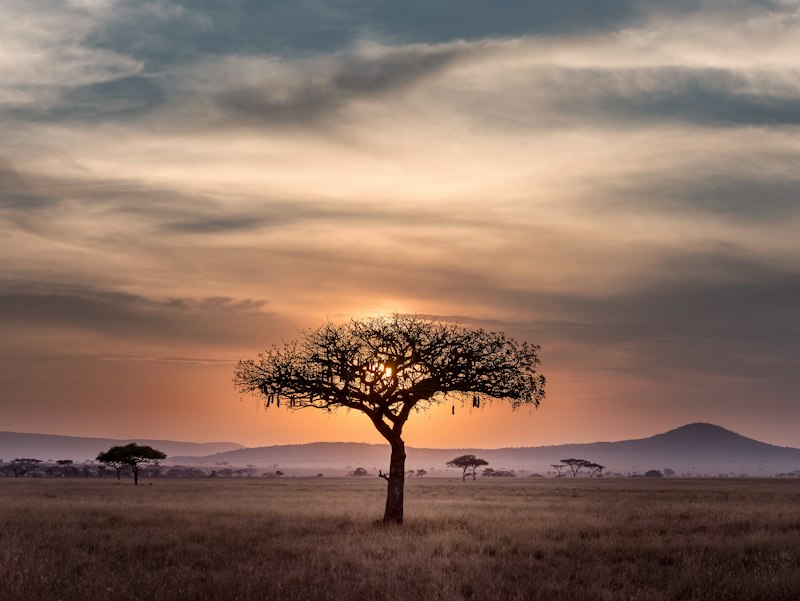
Jun–Oct (dry season)Dry conditions concentrate wildlife around remaining water sources and thin vegetation, giving the best game viewing; the Serengeti's portion of the wildebeest migration is typically in the north around July-September, close to the Kenyan border and Masai Mara.
Mount Kilimanjaro
Jun–Oct, Jan–Feb (driest climbing windows)The two dry windows avoid the heaviest rain and snow at altitude, giving the best summit conditions and visibility; the long rains (March-May) make climbing routes considerably more difficult and less pleasant.
Zanzibar & the coast
Jun–Oct, Dec–FebRuns on its own monsoon pattern — the long rains (March-May) and shorter rains (November) bring the wettest weather, while June-October and December-February are the most reliably dry and sunny.
Month-by-Month Weather
Catalog Data· Climate normals, see sources below(Verified taxonomy records from the TravelGuidesFinder destination catalog.)Average high/low temperatures and rainfall for Arusha (used here as a representative reference point — see regional notes above for other areas).
| Month | High | Low | Rainfall | Season |
|---|---|---|---|---|
| January | 28°C / 82°F | 16°C / 60°F | 65mm | Shoulder |
| February | 28°C / 83°F | 16°C / 61°F | 65mm | Shoulder |
| March | 28°C / 82°F | 17°C / 63°F | 145mm | Low |
| April | 25°C / 77°F | 17°C / 63°F | 340mm | Low |
| May | 23°C / 74°F | 16°C / 62°F | 170mm | Low |
| June | 22°C / 72°F | 15°C / 58°F | 40mm | Shoulder |
| July | 22°C / 72°F | 14°C / 57°F | 20mm | Peak |
| August | 23°C / 74°F | 14°C / 58°F | 15mm | Peak |
| September | 25°C / 77°F | 15°C / 58°F | 15mm | Peak |
| October | 27°C / 80°F | 16°C / 61°F | 40mm | Shoulder |
| November | 27°C / 80°F | 16°C / 62°F | 125mm | Low |
| December | 27°C / 80°F | 16°C / 60°F | 90mm | Low |
Season-by-Season Guide
Dry season safari peak (Jun–Oct)
Dry, cooler nights, minimal rain (15-40mm monthly in Arusha)
Good For
Short rains (Nov)
A shorter, lighter rainy spell (125mm in Arusha)
Good For
Short dry season (Dec–Feb)
Warm and mostly dry inland (26-28°C highs in Arusha), Zanzibar's other good beach window
Good For
Long rains (Mar–May)
The year's heaviest rainfall (Arusha gets 340mm in April alone), many camps close or discount heavily
Good For
Best Time to Visit For...
Serengeti & Ngorongoro safari
June–OctoberDry-season conditions concentrate wildlife and thin vegetation for the best game viewing of the year.
Mount Kilimanjaro climbing
June–October, January–FebruaryThe two dry windows give the best summit weather and visibility; avoid the March-May long rains entirely.
Zanzibar beaches
June–October, December–FebruaryThe island's own wet/dry pattern roughly mirrors the mainland's, with the long and short rains best avoided.
Combining safari and Zanzibar in one trip
June–October (both regions align)Unlike some split-climate countries, Tanzania's safari circuit and Zanzibar share largely the same good dry-season window, making a combined trip easy to time.
Cheapest Time to Visit
April and May, the long rains, bring by far the lowest safari prices — many camps close entirely or discount heavily, and Zanzibar is simultaneously at its wettest too.
Busiest Time to Visit
July through September is the busiest and most expensive safari window, driven by dry-season game viewing overlapping with the Serengeti's portion of the wildebeest migration.
Weather vs. Price Trade-off
June and January-February offer a reasonable compromise — good safari and Kilimanjaro conditions at somewhat lower prices and thinner crowds than the July-September peak.
How to Get There
Kilimanjaro International Airport (JRO) near Arusha is the main gateway for safari and Kilimanjaro climbs; Zanzibar has its own international airport (ZNZ), reachable directly or via a short domestic flight from the mainland.
How Long to Stay
7-10 days covers a proper Serengeti/Ngorongoro safari; 12-14 days allows adding several days on Zanzibar afterward.
Sample Itineraries
What to Pack, By Season
Frequently Asked Questions
What is the best time to visit Tanzania?
June to October for safari and Kilimanjaro climbs, which conveniently overlaps with one of Zanzibar's two good beach windows — a rare case where the safari circuit and coast share the same best season.
When is the wildebeest migration in the Serengeti?
The migration is a year-round circular journey, but its Serengeti portion, including river crossings near the Kenyan border, typically runs July through September, aligning with the broader June-October dry season.
When should I avoid climbing Kilimanjaro?
March through May, the long rains — heavy rain and snow at altitude make climbing routes considerably more difficult and less pleasant; June-October and January-February are the two reliable dry windows.
Last verified: 2026-09-20 · Climate figures are 30-year averages and will not match any single trip exactly.
Sources:Arusha climate normals — Climates to Travel,Zanzibar seasonal guide — Expert Africa