
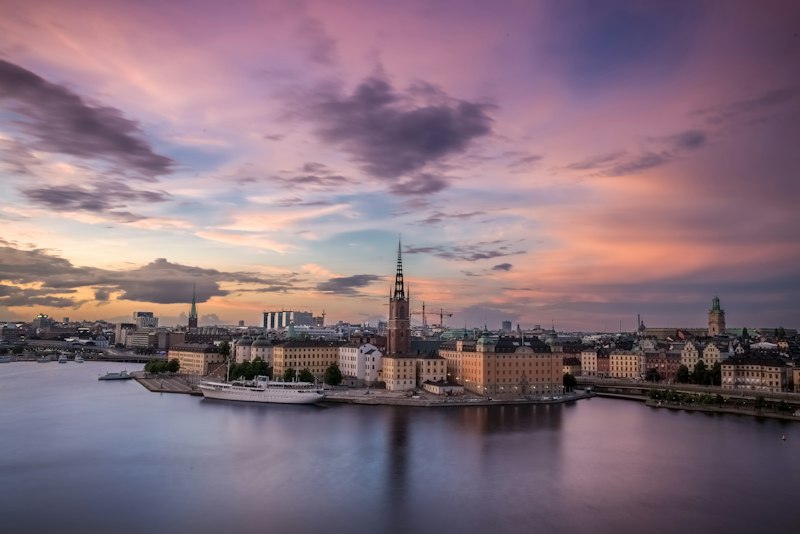
Best Time to Visit Sweden
June to August for warm weather and the midnight sun in the north; December to March in Swedish Lapland for the Northern Lights
Quick Answer
Best Overall
June to August for warm weather and the midnight sun in the north; December to March in Swedish Lapland for the Northern Lights
Peak Season
June–August (long daylight, warmest temperatures, Midsummer festivities)
Shoulder Season
April–May, September
Cheapest Period
November and January–February in the south (excluding aurora-driven demand in the far north)
Weather Varies By Region
Sweden is large enough that no single "best time" applies everywhere. Here's how the timing changes region by region.
Stockholm & southern Sweden (Malmö, Gothenburg)
Jun–AugWarm summers (20-23°C highs) and mild but grey, near-freezing winters; Malmö in the far south is slightly milder than Stockholm year-round.
Swedish Lapland (Kiruna, Abisko) — Northern Lights & midnight sun
Dec–Mar for aurora, Jun for midnight sunWinters here average around -11.5°C, far colder than Stockholm; long, dark nights October-March give strong aurora odds, especially December-January, while June's near-24-hour daylight makes it the definitive midnight sun window instead.
Gothenburg & the west coast archipelago
Jun–AugA similar summer pattern to Stockholm, popular for archipelago boat trips and seafood.
Month-by-Month Weather
Catalog Data· Climate normals, see sources below(Verified taxonomy records from the TravelGuidesFinder destination catalog.)Average high/low temperatures and rainfall for Stockholm (used here as a representative reference point — see regional notes above for other areas).
| Month | High | Low | Rainfall | Season |
|---|---|---|---|---|
| January | 1°C / 34°F | -5°C / 23°F | 30mm | Low |
| February | 1°C / 34°F | -5°C / 23°F | 30mm | Low |
| March | 5°C / 41°F | -3°C / 27°F | 30mm | Low |
| April | 11°C / 52°F | 1°C / 34°F | 45mm | Shoulder |
| May | 16°C / 61°F | 5°C / 41°F | 35mm | Shoulder |
| June | 20°C / 68°F | 10°C / 50°F | 60mm | Peak |
| July | 23°C / 73°F | 13°C / 55°F | 50mm | Peak |
| August | 22°C / 72°F | 12°C / 54°F | 65mm | Peak |
| September | 17°C / 63°F | 8°C / 46°F | 65mm | Shoulder |
| October | 10°C / 50°F | 4°C / 39°F | 40mm | Low |
| November | 5°C / 41°F | 0°C / 32°F | 45mm | Low |
| December | 3°C / 37°F | -3°C / 27°F | 35mm | Shoulder |
Season-by-Season Guide
Summer (Jun–Aug)
Warm and sunny with long daylight (20-23°C highs in Stockholm), near-24-hour daylight in the far north
Good For
Shoulder (Apr–May, Sep)
Mild, cooling or warming, noticeably fewer crowds than summer
Good For
Winter / aurora season (Oct–Mar, peak Dec–Jan in the north)
Cold nationwide (Stockholm highs near freezing); Swedish Lapland is far colder (around -11.5°C average in Kiruna) with long, dark nights
Good For
Best Time to Visit For...
Northern Lights
October–March, peak December–JanuarySwedish Lapland's long, dark, clear nights this far north give strong aurora odds; summer's near-constant daylight makes viewing impossible.
Midnight sun
JuneAround the summer solstice, areas north of the Arctic Circle (Kiruna, Abisko) see the sun stay above the horizon nearly 24 hours.
Stockholm city break
June–AugustWarmest, driest and longest-daylight stretch of the year in the capital.
Icehotel (Jukkasjärvi)
December–AprilRebuilt from ice and snow each winter, typically operating through mid-April before melting.
Midsummer celebrations
Late JuneCentered on the summer solstice, with Dalarna and Lake Siljan among the most traditional places to experience it.
Cheapest Time to Visit
November and January-February bring the lowest prices in Stockholm and southern Sweden — outside the specific demand spike aurora-chasers create in Swedish Lapland during the same months.
Busiest Time to Visit
June-August is the busiest and most expensive window nationwide, when Stockholm, the archipelago and the midnight sun in the far north are all simultaneously at their best — book Icehotel and Lapland aurora lodges separately, as winter has its own high-demand peak in December-January.
Weather vs. Price Trade-off
May and September offer close to summer-level comfort in Stockholm at meaningfully lower prices, though without the extended daylight of the June-August peak.
How to Get There
Stockholm Arlanda (ARN) is the main international gateway; Kiruna Airport (KRN) is the practical entry point for Swedish Lapland, roughly a 90-minute flight from Stockholm.
How Long to Stay
4-5 days for Stockholm alone; 7-9 days to combine Stockholm with a Swedish Lapland aurora or midnight-sun trip.
Sample Itineraries
What to Pack, By Season
Frequently Asked Questions
What is the best time to visit Sweden?
June to August for warm weather, long daylight and the midnight sun in the north; December to March in Swedish Lapland specifically for the Northern Lights.
When can you see the Northern Lights in Sweden?
Roughly October through March, with December and January offering the longest, darkest nights and typically the best odds in Swedish Lapland (Kiruna, Abisko).
What is the midnight sun and when can I see it?
Around the summer solstice in June, areas north of the Arctic Circle like Kiruna and Abisko see the sun stay above the horizon for nearly 24 hours a day.
Last verified: 2026-09-19 · Climate figures are 30-year averages and will not match any single trip exactly.
Sources:Stockholm & regional climate normals — Climates to Travel