
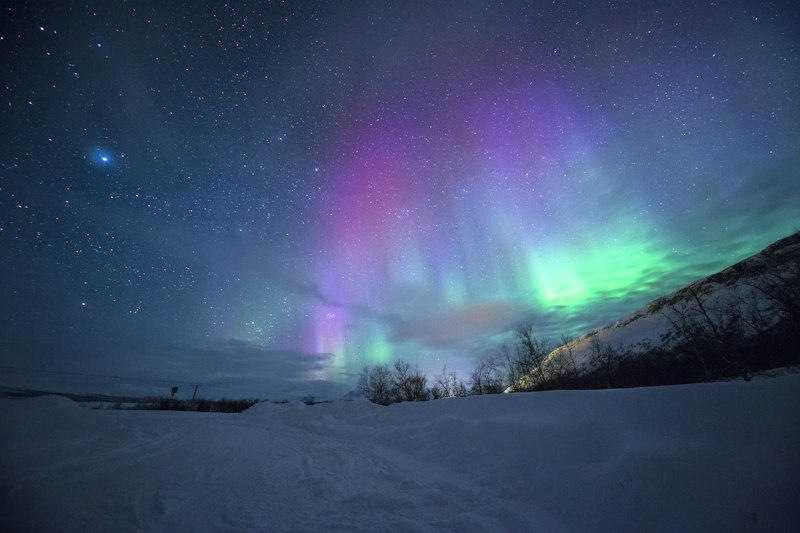
Best Time to Visit Norway
June to August (fjords/midnight sun); November to March (Northern Lights)
Quick Answer
Best Overall
June to August (fjords/midnight sun); November to March (Northern Lights)
Peak Season
June–August (fjord cruises, midnight sun) and December–January (peak Northern Lights darkness)
Shoulder Season
May, September
Cheapest Period
October–November and January–March in Oslo and the south (outside the Arctic north's aurora-season demand)
Weather Varies By Region
Norway is large enough that no single "best time" applies everywhere. Here's how the timing changes region by region.
The fjords (Geirangerfjord, Nærøyfjord, Bergen)
Jun–AugMidnight sun and the fullest cruise/ferry and hiking schedules; winter fjord travel is possible but far more limited and weather-dependent.
Arctic north (Tromsø, Lofoten Islands)
Sep–Mar for Northern Lights; Jun–Aug for midnight sun and hikingThe same region serves two almost opposite purposes depending on season — long dark nights for aurora viewing in winter, or nearly 24-hour daylight for hiking and photography in summer.
Oslo & the south
May–SepMilder than the fjords or the Arctic north, and a viable year-round city-break destination given its more moderate climate.
Month-by-Month Weather
Catalog Data· Climate normals, see sources below(Verified taxonomy records from the TravelGuidesFinder destination catalog.)Average high/low temperatures and rainfall for Oslo (used here as a representative reference point — see regional notes above for other areas).
| Month | High | Low | Rainfall | Season |
|---|---|---|---|---|
| January | 0°C / 32°F | -5°C / 24°F | 60mm | Low |
| February | 1°C / 34°F | -5°C / 24°F | 45mm | Low |
| March | 5°C / 42°F | -2°C / 28°F | 40mm | Low |
| April | 11°C / 52°F | 2°C / 36°F | 50mm | Shoulder |
| May | 17°C / 62°F | 7°C / 44°F | 60mm | Shoulder |
| June | 20°C / 69°F | 11°C / 51°F | 80mm | Peak |
| July | 23°C / 73°F | 13°C / 56°F | 85mm | Peak |
| August | 21°C / 70°F | 13°C / 55°F | 105mm | Peak |
| September | 16°C / 62°F | 9°C / 47°F | 80mm | Shoulder |
| October | 10°C / 49°F | 4°C / 39°F | 90mm | Low |
| November | 4°C / 40°F | 0°C / 32°F | 85mm | Low |
| December | 1°C / 34°F | -4°C / 25°F | 50mm | Low |
Season-by-Season Guide
Summer / midnight sun (Jun–Aug)
Mild in Oslo (20-23°C highs), near-24-hour daylight in the Arctic north around the solstice
Good For
Winter / Northern Lights (Nov–Mar)
Cold and dark, especially in the Arctic north; Oslo stays milder at -5 to 1°C highs — prices run higher in the Arctic north (aurora demand) than in Oslo and the south
Good For
Shoulder (Apr–May, Sep)
Transitional — warming or cooling, increasing or decreasing daylight
Good For
Best Time to Visit For...
Fjord cruises & hiking
June–AugustThe only window with full ferry, cruise and hiking-route schedules.
Northern Lights
November–March, peak December–JanuaryNeeds long, dark nights — impossible during the summer midnight-sun period.
Lofoten Islands
Jun–Aug (midnight sun) or Sep–Mar (aurora)One of the few places genuinely excellent for both opposite purposes, depending on which you're after.
Oslo city break
May–SeptemberMilder and more consistently workable than the fjords or Arctic north.
Budget travel
October–November, January–MarchLower prices in Oslo and the south, outside the Arctic north's own aurora-season demand.
Cheapest Time to Visit
October–November and January–March bring lower prices in Oslo and southern Norway, though the Arctic north (Tromsø, Lofoten) sees its own separate demand spike through this same window specifically for Northern Lights — Norway rarely has a single 'cheap everywhere' month.
Busiest Time to Visit
June–August is the busiest and most expensive window nationwide for fjord cruises and hiking; December–January is the busiest specifically for Northern Lights tourism in the Arctic north, despite being Oslo's own quieter season.
Weather vs. Price Trade-off
May and September are Norway's clearest shoulder-season trade-offs — meaningfully lower prices than the June-August fjord peak, with September additionally offering the very first real Northern Lights chances as nights start lengthening.
Travel Budget
Statistical Estimate· TravelGuidesFinder Cost Index(Derived from seasonal cost modeling; actual on-the-ground prices may vary.)Budget Traveler
$115/day
Mid-Range Traveler
$285/day
Luxury Traveler
$750/day
How to Get There
Oslo Gardermoen (OSL) is the main international gateway; Bergen (BGO) serves the fjords directly, and Tromsø (TOS) is the practical gateway for Arctic north/Northern Lights trips.
How Long to Stay
7 days covers Oslo and a fjord region (Bergen/Geiranger). 10-12 days allows Oslo, the fjords, and a Tromsø/Lofoten extension.
Sample Itineraries
What to Pack, By Season
Frequently Asked Questions
What is the best time to visit Norway?
June to August for the fjords and midnight sun, or November to March for the Northern Lights — these are close to opposite windows, since summer's near-constant daylight makes aurora viewing impossible.
Can you see the Northern Lights in Lofoten in summer?
No — Lofoten and the rest of the Arctic north experience midnight sun in summer, meaning skies never get dark enough. Late September through March is the real aurora window.
Is Oslo worth visiting outside the main fjord/aurora seasons?
Yes — Oslo is milder than the fjords or Arctic north and works reasonably well as a city break for most of the year, outside the depths of winter.
Last verified: 2026-09-19 · Climate figures are 30-year averages and will not match any single trip exactly.