
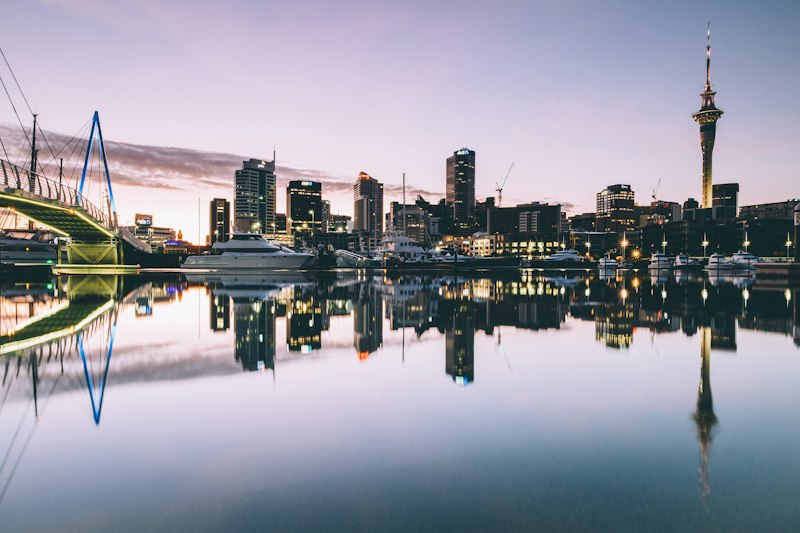
Best Time to Visit New Zealand
December to February (summer)
Quick Answer
Best Overall
December to February (summer)
Peak Season
December–February (summer holidays, includes NZ's own Christmas/New Year peak)
Shoulder Season
March–April (autumn), September–November (spring)
Cheapest Period
June to August (winter, outside South Island ski resort towns)
Weather Varies By Region
New Zealand is large enough that no single "best time" applies everywhere. Here's how the timing changes region by region.
North Island (Auckland, Rotorua, Bay of Islands)
Dec–MarWarmer, more subtropical in the far north; summer is the driest and warmest stretch.
South Island (Queenstown, Fiordland, Mount Cook)
Dec–Feb (hiking), Jun–Sep (skiing)Noticeably colder than the North Island, especially inland; the Great Walks season (Oct–Apr) and ski season (Jun–Oct) are near-opposite windows.
Fiordland / Milford Sound
Dec–MarOne of the wettest places in the country year-round, but summer offers the longest daylight and calmest conditions for cruises.
Month-by-Month Weather
Catalog Data· Climate normals, see sources below(Verified taxonomy records from the TravelGuidesFinder destination catalog.)Average high/low temperatures and rainfall for Auckland (used here as a representative reference point — see regional notes above for other areas).
| Month | High | Low | Rainfall | Season |
|---|---|---|---|---|
| January | 24°C / 74°F | 17°C / 62°F | 75mm | Peak |
| February | 24°C / 75°F | 17°C / 63°F | 65mm | Peak |
| March | 23°C / 73°F | 16°C / 60°F | 85mm | Peak |
| April | 20°C / 68°F | 13°C / 56°F | 100mm | Shoulder |
| May | 18°C / 64°F | 11°C / 52°F | 115mm | Low |
| June | 15°C / 59°F | 9°C / 49°F | 125mm | Low |
| July | 14°C / 58°F | 8°C / 47°F | 145mm | Low |
| August | 15°C / 59°F | 9°C / 48°F | 120mm | Low |
| September | 16°C / 62°F | 10°C / 50°F | 105mm | Shoulder |
| October | 18°C / 64°F | 12°C / 53°F | 100mm | Shoulder |
| November | 19°C / 67°F | 13°C / 56°F | 85mm | Shoulder |
| December | 22°C / 71°F | 15°C / 60°F | 95mm | Peak |
Season-by-Season Guide
Summer (Dec–Feb)
Warm and mostly dry nationwide, 20–24°C highs in Auckland; South Island days are long and mild
Good For
Autumn (Mar–May)
Cooling from 23°C to 17°C, generally settled and dry
Good For
Winter (Jun–Aug)
Cool and wet in the north (14–15°C highs), cold with heavy snow in the South Island mountains
Good For
Spring (Sep–Nov)
Warming from 16°C to 19°C, changeable — 'four seasons in one day' is a real phenomenon
Good For
Best Time to Visit For...
Hiking (Great Walks)
October–April (Great Walks season)Huts require advance booking; December–February is warmest but busiest, October–November and March–April trade some weather certainty for smaller crowds.
Skiing
June–SeptemberSouth Island resorts (Queenstown, Wanaka) and North Island's Whakapapa/Turoa on Mount Ruapehu.
Road trips
December–MarchLongest daylight hours and driest roads, especially on the South Island's alpine passes.
Wildlife (whales, penguins, dolphins)
June–August (whale watching peak), year-round for penguinsKaikoura whale watching runs year-round but sighting odds are strongest in winter.
Budget travel
June–August (outside ski towns)North Island city and thermal-region travel is noticeably cheaper in winter.
Cheapest Time to Visit
June to August is the cheapest window nationwide outside the South Island ski towns (Queenstown, Wanaka), where winter is actually peak season and prices rise accordingly — North Island cities and Rotorua see their lowest rates in this window.
Busiest Time to Visit
Late December through late January is New Zealand's own summer holiday period (schools are out, many businesses close around Christmas) layered on top of peak international arrivals — Great Walk huts for this window often sell out 6+ months ahead.
Weather vs. Price Trade-off
March–April and October–November trade a few degrees of warmth for substantially lower prices and thinner crowds on the Great Walks and in Queenstown — a better balance for hikers than the December–February peak.
Travel Budget
Statistical Estimate· TravelGuidesFinder Cost Index(Derived from seasonal cost modeling; actual on-the-ground prices may vary.)Budget Traveler
$93/day
Mid-Range Traveler
$228/day
Luxury Traveler
$590/day
How to Get There
Auckland (AKL) is the main international gateway on the North Island; Christchurch (CHC) and Queenstown (ZQN) serve the South Island directly. Domestic flights or the drive between islands (via the Interislander ferry) are both common.
How Long to Stay
10–14 days covers one island properly (North or South). 3 weeks allows both islands without feeling rushed, given how much driving time is involved.
Sample Itineraries
What to Pack, By Season
Frequently Asked Questions
What is the best time to visit New Zealand?
December to February (New Zealand's summer) has the warmest, driest weather nationwide and is when all Great Walks and Fiordland cruises are fully open — it's also the most crowded and expensive window.
Is New Zealand's weather the opposite of the Northern Hemisphere?
Yes — New Zealand is in the Southern Hemisphere, so June–August is winter and December–February is summer, the reverse of Europe or North America.
When should I visit New Zealand to avoid crowds?
March–April (autumn) and October–November (spring) offer noticeably fewer crowds and lower prices than the December–February peak, with generally settled weather, especially in autumn.
Last verified: 2026-09-19 · Climate figures are 30-year averages and will not match any single trip exactly.
Sources:Auckland climate normals — Climates to Travel,New Zealand seasonal travel guidance — 100% Pure New Zealand