

From the timeless toll of Big Ben echoing over the River Thames to the brooding, mist-shrouded glens of the Scottish Highlands and the honey-stoned cottages of the Cotswolds, the United Kingdom is a realm where millennia of epic history collide with cutting-edge contemporary culture. Whether you are browsing world-class treasures in London's free national museums, walking the royal cobblestones of Edinburgh's Royal Mile, drinking cask ale beside a peat fire in an 800-year-old country inn, or tracing the dramatic coastlines of Cornwall and Northern Ireland, the UK packs an astonishing wealth of diverse landscapes and stories into an easily navigable island nation.
In 2026, traveling through Britain is marked by major modern conveniences alongside key new entry requirements. The nationwide expansion of the UK Electronic Travel Authorisation (ETA) scheme is now in effect for non-visa international visitors—requiring a quick digital application before boarding your flight. At the same time, high-speed rail lines like the Elizabeth Line in London and LNER's Azuma trains between England and Scotland have made cross-country journeys faster and smoother than ever before.
However, getting maximum value out of a British adventure requires seasoned insider knowledge: taking advantage of the UK's unique split-ticketing train loopholes to slash rail fares by up to 50%, knowing which world-renowned galleries cost absolutely zero pounds to enter, dodging overpriced airport transit traps, and packing the essential layers needed for Britain's delightfully unpredictable four-seasons-in-one-day weather. This comprehensive 2026 master guide covers realistic daily budgets, a scenic 10-day loop, transit strategies, culinary staples, and the new entry rules.
UK Travel Dossier 2026 (Quick-Scan)
Key logistical essentials for planning your 2026 expedition across the British Isles:
• Recommended Trip Duration: 10 to 14 days. 10 days provides a classic highlights journey covering London, Oxford, the Cotswolds, York, and Edinburgh; 14 days allows you to venture deep into the Scottish Highlands, the Isle of Skye, and the Lake District.
• Best Times to Visit: May to September (Late Spring & Summer) brings the warmest temperatures (18°C–25°C), blooming palace gardens, open-air pub terraces, and astonishingly long daylight hours (up to 17.5 hours of light in Scotland around midsummer). November to December is equally magical for festive holiday markets, ice skating rinks, and glowing Regent Street Christmas illuminations.
• Official Currency: British Pound Sterling (GBP / £). Exchange benchmark: £1 GBP ≈ $1.30 USD / €1.18 EUR. The UK is almost entirely cashless; contactless credit/debit cards, Apple Pay, and Google Pay are accepted universally from black cabs to countryside bakeries.
• Primary Gateway Airports: London Heathrow (LHR - Europe's busiest international hub, connected via the Elizabeth Line and Piccadilly Tube), London Gatwick (LGW), Edinburgh Airport (EDI), and Manchester Airport (MAN).
• Entry Requirements: Non-visa visitors (including travelers from the US, Canada, Australia, and EU nations) must obtain a UK Electronic Travel Authorisation (ETA) online or via the UK ETA app prior to departure (£10 fee, valid for 2 years).
• Realistic Daily Budgets: $65–$95 USD / £50–£75 (Shoestring / Hostels & Supermarket meal deals) / $170–$290 USD / £130–£220 (Comfortable Mid-Range / Boutique city hotels & Historic pub meals) / $480–$1,100+ USD / £370–£850+ (Luxury / 5-Star grand hotels, private black cab tours & Michelin dining).
UK Daily Travel Budget Breakdown (2026 Estimates)
While London is recognized as one of the world's costlier capitals, the United Kingdom offers extraordinary cost-saving perks that balance your overall budget—most notably, free admission to nearly all permanent national museums and galleries. Here is a realistic daily cost breakdown for 2026:
| Budget Tier | Daily Cost (GBP) | Daily Cost (USD) | Accommodation Style | Dining & Transit Strategy |
|---|---|---|---|---|
| Shoestring / Backpacker | £50 – £75 | $65 – $98 | Clean youth hostels (Wombat's, Generator) or budget pod hotels | Supermarket meal deals (M&S, Tesco), bakery pasties, off-peak rail fares & bus passes |
| Comfortable Mid-Range | £130 – £220 | $170 – $285 | Stylish 3★ to 4★ boutique hotels (Premier Inn Hub, Resident) or traditional countryside B&Bs | Historic gastropub dining, afternoon tea, Advance National Rail trains & TfL daily fare caps |
| Luxury & Stately Estates | £370 – £850+ | $480 – $1,100+ | 5★ landmark hotels (The Savoy, Gleneagles, Claridge's) or historic Scottish castle estates | Multi-course Michelin tasting menus, first-class LNER rail travel & private chauffeur transfers |
Top Money-Saving Tips Across the UK
- Take Advantage of Free National Museums: The British Museum, National Gallery, Natural History Museum, Victoria & Albert Museum, Tate Modern, and National Museum of Scotland in Edinburgh are 100% free to enter.
- Master the 'Split Ticketing' Rail Hack: Due to the UK's fragmented rail fare structure, buying separate tickets for segments along the same train journey (using apps like Trainline or SplitMyFare) often cuts the ticket cost by 30% to 50% without you ever needing to change seats.
- Use Contactless Payment for Transit: Never buy paper single Tube tickets in London (£6.70 cash vs £2.80 contactless). Simply tap your bank card or smartphone at turnstiles; TfL automatically caps your daily spending so you never overpay.
- Rely on Supermarket 'Meal Deals': Every major British supermarket (Marks & Spencer, Tesco, Sainsbury's, Boots) offers a lunchtime meal deal containing a fresh gourmet sandwich/wrap, a snack (crisps, fruit, or boiled eggs), and a drink for just £3.50 to £4.50.
- Book Major Heritage Passes: If visiting multiple royal residences and historic ruins, an English Heritage or National Trust touring pass pays for itself in just 3 visits.
1. Historic London — Royal Palaces, Westminster & Vibrant Neighborhoods
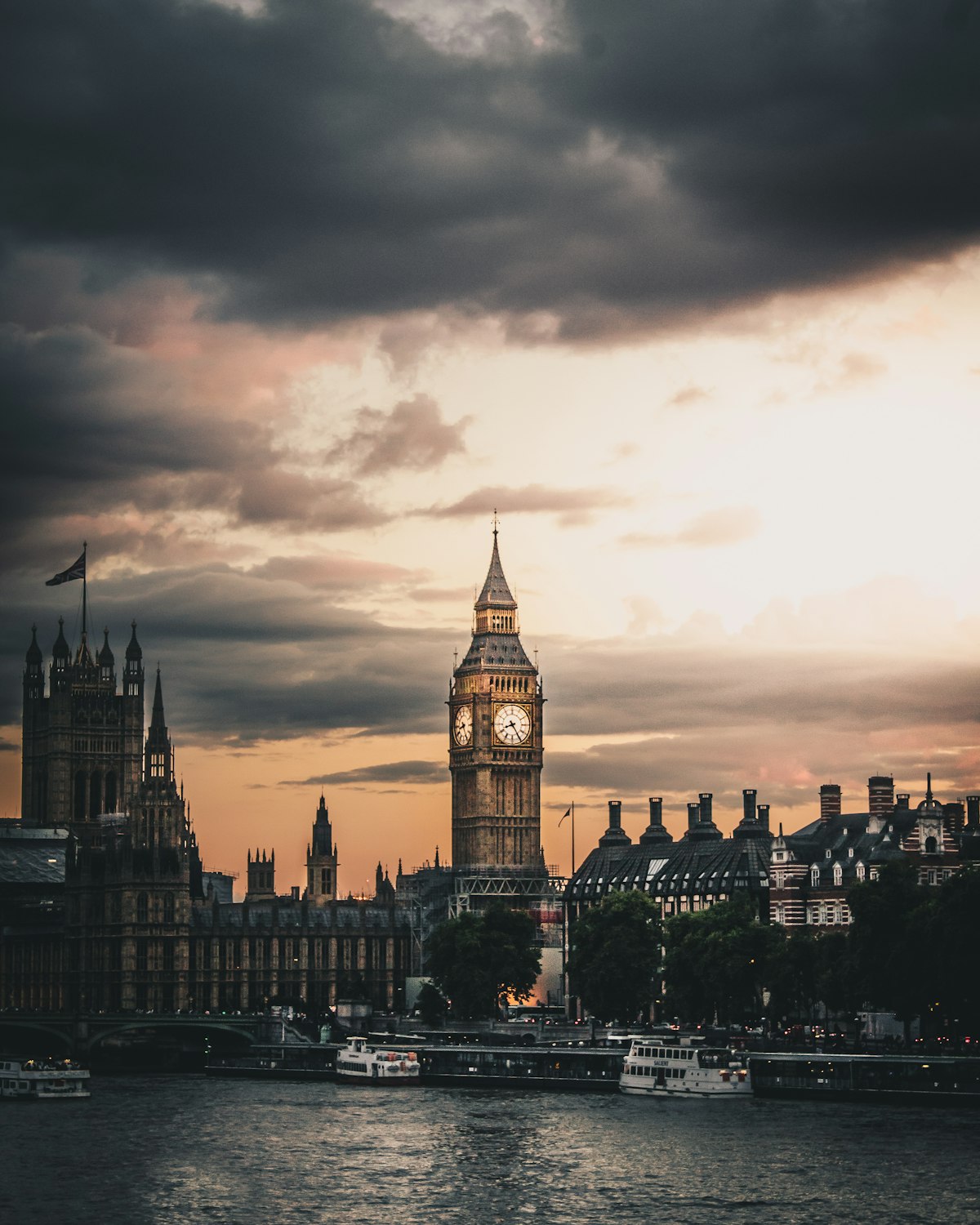
London is a metropolis of distinct villages strung together along the winding curves of the River Thames. Begin your exploration at Westminster, gazing up at the newly restored golden clock face of Elizabeth Tower (Big Ben) and the gothic spires of Westminster Abbey, where British monarchs have been crowned since 1066. Walk through St. James's Park to Buckingham Palace to witness the Changing of the Guard, then wander down the tree-lined Mall toward Trafalgar Square.
Beyond the royal postcard monuments lies the true heartbeat of modern London: food halls and neighborhood street markets. Head to Borough Market next to London Bridge to savor hot salt beef bagels, piping hot mushroom risotto, and fresh oysters. Stroll along the South Bank past the Tate Modern and Shakespeare's Globe, or spend a sun-drenched afternoon browsing vintage record shops and street fashion along the colorful canals of Camden and the brick lanes of Shoreditch.
2. The Scottish Highlands & Edinburgh — Castles, Lochs & Wild Beauty

Boarding the LNER train from London Kings Cross to Edinburgh Waverley is one of the great railway experiences of Europe, hugging dramatic North Sea cliffs as you cross the border into Scotland. Edinburgh itself is pure architectural drama: an extinct volcano cradling the ancient Edinburgh Castle, overlooking a UNESCO-listed Old Town of medieval tenement wynds on one side and the neoclassical Georgian New Town on the other. Hike up Arthur's Seat for a 360-degree panoramic vista across the city and the Firth of Forth.
Venturing north into the Scottish Highlands reveals an untamed wilderness of towering Munros, deep freshwater lochs, and solitary stone castles. Drive through the haunting, awe-inspiring pass of Glen Coe—site of the infamous 1692 clan massacre—watch the historic Jacobite steam train (the real-life Hogwarts Express) chug over the 21 arches of the Glenfinnan Viaduct, and cross the bridge to the Isle of Skye to marvel at the jagged volcanic pinnacles of the Quiraing and the Old Man of Storr.
3. The Cotswolds & Oxford — Quintessential Honey-Stone English Charm

Just ninety minutes west of London lies the Cotswolds Area of Outstanding Natural Beauty—an idyllic expanse of rolling green hills, wandering sheep pastures, and picture-perfect villages constructed from warm, oolitic Jurassic limestone. Villages like Castle Combe, Bourton-on-the-Water (with its miniature stone footbridges spanning the shallow River Windrush), and Chipping Campden feel completely suspended in time, free of modern overhead wires and commercial signage.
Pair your Cotswolds ramble with a day in the ancient university city of Oxford. Wander among the 'dreaming spires' of historic colleges that educated dozens of British prime ministers, Nobel laureates, and literary titans from J.R.R. Tolkien to C.S. Lewis. Don't miss taking a punt boat along the quiet River Cherwell, pushing off the riverbed with a long wooden pole before enjoying a pint of bitter at the historic Turf Tavern, hidden down a winding medieval alley.
The Ultimate 10-Day United Kingdom Itinerary
This field-tested 10-day route seamlessly combines the UK's premier historical landmarks, countryside charm, and Scottish wilderness via comfortable train connections:
### Days 1–3: The Glory of London Explore Westminster Abbey, the Tower of London (and the Crown Jewels), the British Museum, and the vibrant South Bank. Spend evenings sampling West End theater productions and savoring dinner in Covent Garden or Soho.
### Days 4–5: Oxford & The Cotswolds Countryside Pick up a rental car or take a train to Oxford to tour the historic Bodleian Library and Christ Church College. Continue into the heart of the Cotswolds to explore Castle Combe, enjoy a traditional cream tea, and sleep in an authentic country coaching inn.
### Days 6–7: Medieval York to Royal Edinburgh Drive or rail northeast to the walled city of York to walk the Shambles (the inspiration for Harry Potter's Diagon Alley) and visit York Minster. Catch the afternoon express train to Edinburgh to walk the Royal Mile and tour Edinburgh Castle.
### Days 8–10: The Scottish Highlands & Glencoe Take a scenic day tour or drive west through Stirling to Glen Coe and Fort William. Admire the scenery of Loch Ness and the dramatic Glenfinnan Viaduct before returning to Edinburgh for your departure or catching the Caledonian Sleeper train back to London.
Getting Around Britain: Trains, Driving & Transit in 2026
Transportation across Great Britain is exceptionally dense, efficient, and interconnected. Keep these transport rules in mind:
UK Transport Masterclass
- National Rail Network: High-speed trains connect London to major cities in hours: Birmingham in 80 mins, Manchester in 2 hrs, Edinburgh in 4 hrs 20 mins. Book 'Advance' tickets 8–12 weeks ahead for up to 60% savings.
- Driving on the Left: In the UK, driving is on the left side of the road. In rural Scotland and the Cotswolds, watch out for single-track roads with 'Passing Places'—always yield to oncoming traffic on your right or vehicles coming uphill.
- The Caledonian Sleeper: For an unforgettable journey, book an overnight berth on the Caledonian Sleeper train, falling asleep in London and waking up amidst the misty mountains of the Scottish Highlands.
- Never Hail Airport Black Cabs for Long Distances: Catching a black cab from Heathrow to central London can cost upwards of £90–£120. Take the modern Elizabeth Line (£13.30) or the Piccadilly Tube line (£5.60) instead.
Authentic British Food & Drink You Must Try
British gastronomy has undergone a massive culinary renaissance. Modern British cooking emphasizes exceptional local provenance, organic farm-to-table produce, and rich seasonal traditions:
Iconic British Dishes & Traditions
- The Traditional Sunday Roast: Served every Sunday afternoon in pubs across the country—slices of roast beef, lamb, or pork served with golden roast potatoes, seasonal vegetables, fluffy Yorkshire pudding, and piping-hot rich gravy.
- Fish and Chips: Fresh cod or haddock encased in a crispy beer batter, served with thick-cut chips, mushy peas, tartare sauce, and a generous splash of malt vinegar.
- Full English / Full Scottish Breakfast: A legendary morning plate featuring fried eggs, Cumberland sausages, back bacon, baked beans, grilled tomatoes, buttered toast, and black pudding (plus haggis and tattie scones in Scotland).
- Afternoon Cream Tea: Warm plain or fruit scones served with thick Cornish clotted cream, strawberry jam, and a pot of Earl Grey or English Breakfast tea. (In Devon, cream goes first; in Cornwall, jam goes first!)
- Classic Pub Ales & Single Malt Scotch: Enjoy a pint of hand-pumped room-temperature cask bitter or explore peaty Islay single-malt whiskies in a historic Scottish tavern.
New UK ETA System: What Travelers Need to Know for 2026
If you are planning a journey to the UK in 2026, be aware of the UK Government's new Electronic Travel Authorisation (ETA):
UK ETA Rules at a Glance
- Who Needs It: All non-visa international travelers, including citizens of the United States, Canada, Australia, New Zealand, and European Union countries.
- How to Apply: Apply digitally online or through the official 'UK ETA' mobile app. The process takes only 5–10 minutes by scanning your biometric passport and taking a quick selfie.
- Cost & Validity: The fee is £10 per applicant. Once granted, the ETA is electronically linked to your passport and remains valid for multiple entries over a 2-year period (or until your passport expires).
- Processing Time: Most applications are approved within 3 working days, but you should submit your application at least 1–2 weeks before your scheduled travel date.
Frequently Asked Questions (FAQ) — UK Travel in 2026
Do I need an ETA to travel to the United Kingdom in 2026?
Yes. In 2026, the UK Electronic Travel Authorisation (ETA) is mandatory for eligible non-visa travelers visiting the UK for tourism, business, or transit. You must apply and obtain your digital clearance before boarding your flight.
Are museums in London really free to enter?
Yes! Major national museums funded by the British government—including the British Museum, Natural History Museum, Victoria and Albert Museum (V&A), Tate Modern, Science Museum, and National Gallery—charge no admission fee for their permanent collections.
Do I need to carry cash in the United Kingdom?
Hardly ever. The UK is one of the most cashless economies in Europe. Contactless cards, Apple Pay, and Google Pay are standard across London and regional towns, even for tiny transactions like buying a newspaper or paying bus fares.
Is it better to rent a car or take the train in the UK?
For travel between major cities (London, Oxford, Cambridge, York, Edinburgh, Manchester), the train is vastly faster, cheaper, and stress-free. However, if you want to explore the rural Cotswolds or remote regions of the Scottish Highlands, renting a car offers unmatched freedom.
When is the best time to visit Scotland to avoid midges?
The infamous Scottish Highland midges (tiny biting insects) are most active on calm, humid days from June through August. Visiting in May or September offers pleasant weather, beautiful spring blooms or autumn colors, and virtually zero midges.
James Harrow
Verified ExpertTravel Writer & Expert
Sheraz is a passionate world traveler and the founder of Travel Guides Finder. With years of experience exploring diverse cultures, tasting authentic cuisines, and navigating complex visa requirements, he curates expert guides to help you travel smarter and safer.


