

With razor-sharp snow-capped peaks piercing crystalline blue skies, emerald-green valleys echoing with the sound of cowbells, cascading alpine waterfalls, and panoramic red trains gliding across towering stone viaducts, Switzerland looks like a fairy tale brought to life.
In 2026, Switzerland remains the undisputed crown jewel of European mountain travel and scenic rail tourism. The Swiss Federal Railways (SBB) network operates with legendary punctuality, mountain cable cars reach dizzying 3,800-meter peaks in minutes, and world-class hiking trails are immaculately signposted. However, Switzerland is also one of the most expensive countries on Earth. A simple sit-down dinner can easily exceed $50 USD per person, and mountain summit excursions can cost over $200 USD without proper rail passes.
Whether you are riding the world-famous Glacier Express through the Swiss Alps, hiking through the 72-waterfall valley of Lauterbrunnen, or staring up at the jagged pyramid of the Matterhorn in Zermatt, this comprehensive 2026 guide gives you exact costs, train pass strategies, and insider tips to travel Switzerland seamlessly.
## Switzerland Travel at a Glance
**Best trip length:** 7 to 10 days for a classic scenic train and mountain valley route.
**Best time to visit:** July to September for alpine hiking, wildflowers, and warm lake swimming; December to March for world-class skiing and winter wonderlands.
**Currency:** Swiss Franc (CHF). (Roughly 1 CHF ≈ $1.15 USD / €1.05 EUR).
**Languages:** German (63%), French (23%), Italian (8%), and Romansh. English is spoken fluently by virtually everyone in tourism, transit, and hospitality.
**Main airports:** Zurich Airport (ZRH), Geneva Airport (GVA), EuroAirport Basel-Mulhouse-Freiburg (BSL).
**Typical daily budget:** $80–$120 USD (Budget) / $220–$380 USD (Mid-Range) / $600–$1,500+ USD (Luxury).
**Best regions:** The Jungfrau Region (Lauterbrunnen, Grindelwald, Mürren), Valais (Zermatt & Matterhorn), Central Switzerland (Lucerne & Lake Lucerne), Lake Geneva (Montreux & Lausanne).
**Best for:** Scenic panoramic train journeys, alpine hiking, skiing, chocolate and cheese tastings, lake cruises.
---
Switzerland Travel Facts
| Travel Factor | Information |
|---|---|
| Country | Swiss Confederation (Switzerland) |
| Federal City / Capital | Bern (Largest cities: Zurich, Geneva, Basel) |
| Currency | Swiss Franc (CHF / Fr.) |
| Time Zone | Central European Time (UTC +1 / UTC +2 in Summer) |
| Power Outlets | Type J (Unique Swiss 3-pin plug) and Type C (Standard Euro 2-pin plugs fit into Swiss sockets) |
| Recommended Trip Length | 8 to 12 days |
| Tap Water | 100% pure, mineral-rich alpine water (Flowing freely from public drinking fountains in every town and city!) |
---
How Much Does a Trip to Switzerland Cost in 2026?
Switzerland operates on high wages and strict quality standards, making accommodation and sit-down dining expensive. However, savvy travelers utilize Swiss rail passes, stay in mountain guesthouses, and purchase prepared meals from Swiss supermarkets to experience luxury-level scenery on a sensible budget.
*(All estimates in USD, based on 1 CHF ≈ $1.15 USD exchange rate.)*
Budget Traveler
Stays in clean Swiss youth hostels (such as Swiss Youth Hostels network) or budget mountain guesthouses ($40–$65/night for dorms or simple private rooms). Buys 80% of meals at *Coop* or *Migros* supermarkets ($10–$18 per day for fresh baguettes, Swiss cheeses, roast chicken, and chocolate). Travels using a Swiss Half Fare Card and focuses on free high-altitude hiking trails rather than expensive cable car summits every day.
Mid-Range Traveler
Stays in charming 3-star alpine chalets or modern boutique hotels with mountain balconies ($140–$250/night with buffet breakfast). Mixes casual supermarket lunches with cozy evening fondue and raclette dinners in traditional taverns ($35–$60 per meal). Uses a multi-day Swiss Travel Pass for unlimited trains, buses, lake steamers, and free entry to 500+ museums, along with 50% discounts on mountain cable cars.
Luxury Traveler
Stays in historic 5-star grand hotels and luxury alpine spa resorts (such as The Omnia in Zermatt, Victoria-Jungfrau in Interlaken, or Badrutt's Palace in St. Moritz at $600–$1,800+/night). Dines at Michelin-starred restaurants and private wine cellars. Books first-class panoramic rail seats (Excellence Class on the Glacier Express) and takes private helicopter sightseeing flights over the Aletsch Glacier.
| Expense (Per Person / Day) | Budget | Mid-Range | Luxury |
|---|---|---|---|
| Accommodation | $40 – $65 | $140 – $250 | $400 – $1,200+ |
| Food & Dining | $15 – $30 | $55 – $95 | $150 – $350+ |
| Public Transport & Trains (Per-day average) | $20 – $40 | $45 – $75 | $110 – $250+ |
| Mountain Cable Cars & Excursions | $15 – $35 | $40 – $90 | $120 – $350+ |
| City Tourist Tax & Incidentals | $4 – $8 | $8 – $15 | $20 – $50+ |
| Total Daily Cost | $94 – $178 | $288 – $525 | $800 – $2,200+ |
---
Best Time to Visit Switzerland in 2026
Switzerland is a true year-round destination, with summer alpine greenery and winter ski snow offering radically different holiday experiences.
| Season | Months | Climate & Conditions | Best For |
|---|---|---|---|
| Summer (Peak) | July – August | Pleasant 20–26°C, lush green pastures, all mountain passes & cable cars open, alpine lakes warm for swimming. | High-altitude hiking, lake cruises, families |
| Autumn (Shoulder) | Sept – October | Crisp 12–18°C, golden larch tree foliage, grape harvests around Lake Geneva, clear skies, lower crowds. | Photography, wine tasting, scenic trains |
| Winter (Ski Season) | Dec – March | -2 to 5°C in valleys, heavy snow in mountains, bustling ski slopes, Christmas markets in Zurich and Basel. | Skiing, snowboarding, winter wonderlands, fondue |
| Spring (Low/Shoulder) | April – May | 10–16°C, valley flowers in bloom, snow melting; many high-altitude cable cars closed for annual maintenance. | City breaks (Zurich, Lucerne), waterfalls flowing full |
---
4 Best Places to Visit in Switzerland
1. The Jungfrau Region: Lauterbrunnen & Grindelwald
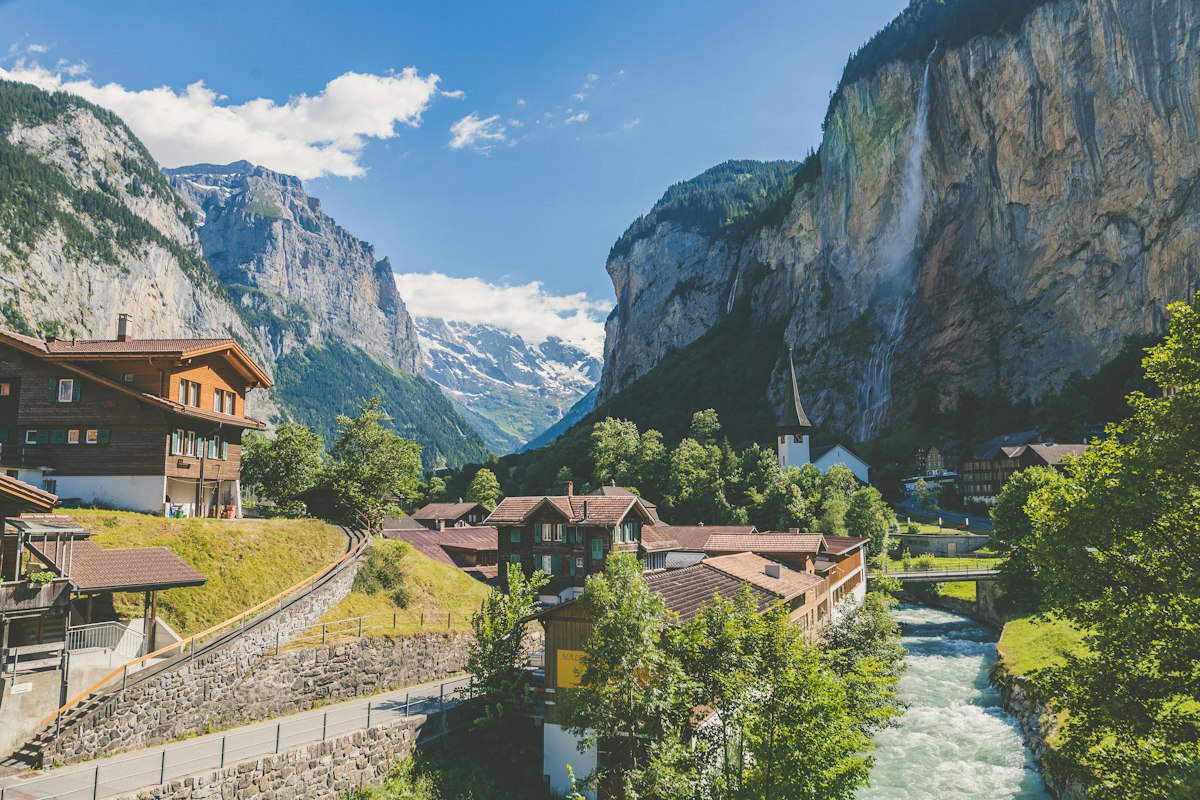
Why visit: The quintessential postcard of Switzerland. Lauterbrunnen is a dramatic U-shaped valley framed by 72 plunging waterfalls and towering cliff faces. Car-free mountain villages like Mürren and Wengen perch precariously on clifftops above.
Top Attractions: Trümmelbach Falls (subterranean glacier waterfalls), Jungfraujoch ("Top of Europe" high-altitude rail station at 3,454m), Grindelwald First cliff walk and zip-line, Mürren mountain viewpoint.
Recommended Stay: 3 to 4 days.
Practical Tip: Do not stay in the tourist hub of Interlaken if you want authentic alpine magic. Stay up in the car-free village of Wengen or Mürren; you will wake up directly facing the Eiger, Mönch, and Jungfrau peaks.
2. Zermatt & The Iconic Matterhorn
Why visit: Nestled at the foot of the world's most recognizable mountain, Zermatt is a car-free alpine wonderland offering 365-day glacier skiing, incredible hiking, and world-class luxury dining.
Top Attractions: Gornergrat cogwheel railway (spectacular 360-degree panorama of 29 peaks over 4,000 meters), Matterhorn Glacier Paradise (highest cable car station in Europe at 3,883m), hike to Riffelsee for the Matterhorn reflection.
Recommended Stay: 2 to 3 days.
Practical Tip: Take the very first morning Gornergrat train up at 7:00 AM. Get off at the *Rotenboden* stop and walk 5 minutes down to Lake Riffelsee before the wind picks up to capture the perfect, mirror-still reflection of the Matterhorn in the water.
3. Lucerne & Lake Lucerne
Why visit: A picture-perfect medieval city situated on the shores of Lake Lucerne, surrounded by towering peaks like Mount Pilatus and Mount Rigi. It is the ideal gateway for combining culture, history, and mountain excursions.
Top Attractions: Chapel Bridge (14th-century wooden covered bridge), Lion Monument, scenic Lake Lucerne steamboat cruise, Mount Pilatus "Golden Round Trip" (boat + world's steepest cogwheel railway + cable car).
Recommended Stay: 2 days.
Practical Tip: If you hold a Swiss Travel Pass, the scenic boat cruises on Lake Lucerne and the cogwheel train up to the summit of Mount Rigi are 100% free!
4. Scenic Panoramic Rail: Glacier Express & Bernina Express
Why visit: Switzerland operates the most spectacular railway journeys in the world. The Glacier Express (the "World's Slowest Express Train") connects Zermatt and St. Moritz through panoramic glass-domed cars, traversing 291 bridges, 91 tunnels, and the dramatic 2,033-meter Oberalp Pass.
Top Attractions: Landwasser Viaduct (curving stone bridge plunging into a cliff tunnel), Albula Line UNESCO World Heritage railway, Bernina Express route past glaciers into Palm-fringed Italy.
Recommended Stay: 1 full travel day (approx 8 hours Zermatt to St. Moritz).
Practical Tip: Seat reservations are mandatory for the Glacier Express ($40–$55 USD) in addition to your train ticket/Swiss Travel Pass. Book your seat reservations exactly 93 days in advance, as panoramic seats sell out quickly during summer and autumn.
---
6 Swiss Dishes You Must Try
Swiss cuisine is hearty, comforting, and deeply tied to centuries-old alpine dairy farming traditions.
- Swiss Cheese Fondue: Melted Gruyère and Emmentaler cheese blended with white wine, garlic, and a splash of cherry schnapps (*Kirschwasser*), kept warm over a tabletop burner and eaten by dipping cubes of crusty bread on long forks.
- Raclette: A wheel of cow's milk cheese heated under a broiler until the top layer bubbles and melts, then scraped directly over boiled baby potatoes, pickled gherkins, and pearl onions.
- Rösti: Switzerland’s national potato dish. Grated potatoes pan-fried in butter until golden and crispy like a giant pancake, often topped with fried eggs, melted cheese, and ham.
- Zürcher Geschnetzeltes: Thin strips of tender veal cooked in a rich, creamy white wine and mushroom sauce, traditionally served alongside a golden potato Rösti.
- Swiss Chocolate: From boutique artisan chocolatiers (like Läderach or Sprüngli in Zurich) to everyday supermarket Lindt bars, Swiss chocolate is the richest and smoothest in the world thanks to alpine milk.
- Bircher Müsli: Created around 1900 by Swiss physician Maximilian Bircher-Benner. Rolled oats soaked overnight in milk, mixed with grated apples, lemon juice, yogurt, nuts, and fresh berries.
---
The Swiss Rail Pass Breakdown: Which Pass Should You Buy in 2026?
Public transportation in Switzerland is unmatched. Never rent a car for a standard tourist itinerary; trains take you directly into car-free mountain villages where cars are prohibited.
| Pass Type | Best For | What it Covers | 2026 Adult Price (Approx) |
|---|---|---|---|
| Swiss Travel Pass (3, 4, 6, 8, or 15 days) | Travelers visiting multiple regions & taking daily trains | Unlimited trains, buses, lake boats, 500+ free museums, 50% off mountain cable cars | ~$290 – $520 USD (Consecutive 3 to 8 days) |
| Swiss Half Fare Card (Valid 1 month) | Budget travelers staying longer in one valley | 50% discount on ALL trains, buses, boats, and mountain cable cars nationwide | ~$135 USD (One-time purchase) |
| Berner Oberland Pass | Travelers spending 4+ days solely in Jungfrau / Interlaken | 100% free travel on regional mountain cable cars & trains | ~$260 – $380 USD |
| Point-to-Point "Supersaver" Tickets | Travelers taking only 1 or 2 fixed train routes | Discounted tickets for a specific date/time booked in advance on SBB app | Varies ($20 – $60) |
---
Suggested 10-Day Classic Swiss Scenic Train Itinerary
This first-timer route connects Zurich, Lucerne, the Jungfrau Region, and Zermatt via panoramic rail.
- Day 1: Arrive in Zurich & Train to Lucerne. Land at Zurich Airport (ZRH). Take the 45-minute direct train to Lucerne. Walk across the historic Chapel Bridge and take a sunset Lake Lucerne boat cruise.
- Day 2: Lucerne & Mount Rigi. Morning excursion up Mount Rigi by cogwheel train. Afternoon stroll through Lucerne Old Town.
- Day 3: Lucerne to Lauterbrunnen Valley. Take the scenic *Luzern-Interlaken Express* over the Brünig Pass into Interlaken, then transfer up to Lauterbrunnen. Check into your chalet in car-free Wengen.
- Day 4: Jungfraujoch "Top of Europe". Take the Eiger Express gondola and cogwheel train up to Jungfraujoch (3,454m). Walk through the Ice Palace and take in the panoramic view of the vast Aletsch Glacier.
- Day 5: Mürren & Gimmelwald Hiking. Ride the cable car to Mürren. Hike the gentle, scenic trail down to the tiny farming hamlet of Gimmelwald. Explore Trümmelbach Falls in the afternoon.
- Day 6: Lauterbrunnen to Zermatt. Scenic train journey from the Bernese Oberland through the Lötschberg tunnel into the Valais canton. Arrive in car-free Zermatt. First sunset views of the Matterhorn.
- Day 7: Gornergrat Railway & Lake Riffelsee. Ride the historic cogwheel train to Gornergrat (3,089m). Hike around Lake Riffelsee and enjoy lunch with Matterhorn views.
- Day 8: Matterhorn Glacier Paradise. Ascend the 3S cable car to Matterhorn Glacier Paradise (3,883m). Walk through the glacier ice cave and view peaks in Italy and France.
- Day 9: Glacier Express to St. Moritz or Train to Zurich. Take the iconic Glacier Express panoramic train or a fast direct train back to Zurich. Enjoy evening dinner along Lake Zurich.
- Day 10: Depart. Take the 10-minute train to Zurich Airport (ZRH) for your flight home.
---
Safety, Budget Hacks & Supermarket Secrets
- The Supermarket Hack (Coop & Migros): Eating in Swiss restaurants 3 times a day will double your budget. Swiss supermarkets (*Coop* and *Migros*) offer high-quality hot food counters, fresh salads, gourmet sandwiches, and ready-to-eat roasted chickens for $6–$12 USD. Grab a picnic and eat on an alpine meadow bench with million-dollar views for $8.
- Never Buy Bottled Water: Switzerland has the cleanest tap water in the world. Thousands of ornate public fountains in villages and cities dispense free, ice-cold mountain spring water. Carry a reusable water bottle everywhere.
- Car-Free Villages: Zermatt, Wengen, Mürren, and Bettmeralp are strictly car-free. If you rent a car, you will be forced to park in expensive parking garages at the base of the mountain (e.g., Täsch or Lauterbrunnen) and pay for trains anyway. Travel by train!
- Download the SBB Mobile App: The official SBB Swiss Railways app is the best transit app in the world. It shows real-time train platform numbers, occupancy levels, delay alerts, and allows 1-click ticket purchases.
---
FAQ
1. Is the Swiss Travel Pass worth it in 2026?
Yes, if you plan to travel between 2 or more cities, take lake cruises, visit museums, and use mountain railways. The pass pays for itself quickly, but its greatest benefit is convenience: you never have to buy individual tickets or wait in ticket queues—you simply hop on any train, bus, or boat.
2. How many days are ideal for a first trip to Switzerland?
A 7 to 10-day trip is ideal. This allows you to explore 2 major alpine regions (e.g., the Jungfrau Region and Zermatt) along with Lucerne or Zurich without feeling exhausted by constant travel.
3. Do I need cash in Switzerland?
No. Credit cards, debit cards, and Apple/Google Pay are universally accepted across Switzerland, even for small €2 bakery items, mountain gondolas, and parking meters. You do not need to exchange physical Swiss Francs.
4. When do mountain hiking trails open in the Swiss Alps?
High-altitude hiking trails (above 2,000 meters) generally open between mid-June and early July, once winter snowpack has melted. If you visit in May, lower valley trails around Lauterbrunnen and Lake Lucerne are open, but high mountain passes will be closed.
5. How expensive is dining in Switzerland?
In casual restaurants, a main dish (pasta, burger, or schnitzel) typically costs $28 to $45 USD (25–40 CHF). A traditional fondue dinner costs around $35 to $50 USD per person. A pint of local draft beer costs $8 to $11 USD.
6. Do you need to tip in Switzerland?
Tipping is not expected or required in Switzerland, as service charges and fair wages are legally included in all bill totals. Rounding up to the nearest 2–5 Francs or leaving a 5% tip for exceptional service is customary.
7. Can I visit Italy or France easily from Switzerland?
Yes! High-speed EuroCity and TGV trains connect Geneva to Paris in 3 hours, Zurich to Milan in 3.5 hours, and Zermatt directly connects to the Italian border via the Matterhorn Alpine Crossing cable car system into Cervinia, Italy.
---
Elena Rodriguez
Verified ExpertTravel Writer & Expert
Sheraz is a passionate world traveler and the founder of Travel Guides Finder. With years of experience exploring diverse cultures, tasting authentic cuisines, and navigating complex visa requirements, he curates expert guides to help you travel smarter and safer.


