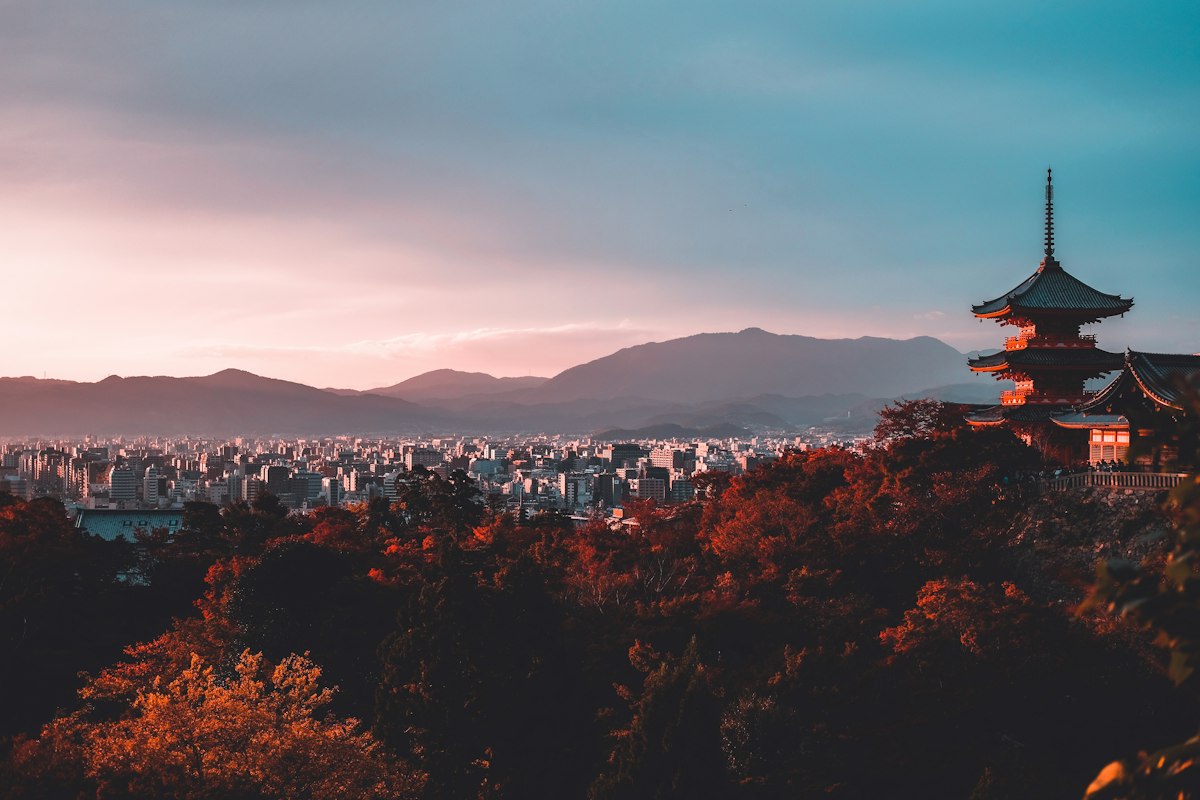
Cherry blossoms get all the press, but Japan's autumn foliage season — koyo (紅葉) — is arguably even more spectacular. Maples, ginkgos, zelkovas, and Japanese oaks ignite in shades of red, burgundy, orange, and gold across every corner of the archipelago. The season rolls south over six to eight weeks, which means with the right planning you can chase the peak from one region to the next. This guide covers the 2026 peak dates, the ten best viewing spots, how to avoid the worst crowds, and everything practical you need to know.
What Is Koyo? The Japanese Tradition of Autumn Leaf Viewing
Koyo literally means 'crimson leaves' and refers both to the seasonal colour change and to the cultural practice of appreciating it — much like hanami (flower viewing) in spring. The tradition has roots in the Nara period (8th century), when aristocrats held leaf-viewing parties in imperial gardens. Today the Japan Meteorological Corporation publishes an annual koyo forecast that Japanese media covers as extensively as weather news, and tens of millions of domestic travellers plan trips around it.
2026 Koyo Season Calendar: When Each Region Peaks
Koyo moves from north to south and from altitude to sea level. The dates below are the typical peak window for each region; actual timing shifts a few days earlier or later depending on summer temperatures (a hotter summer can delay autumn colour by 1–2 weeks).
| Region | Peak Koyo Window | Key Location |
|---|---|---|
| Hokkaido | Late Sep – Mid Oct | Daisetsuzan National Park |
| Tohoku | Mid Oct – Late Oct | Towada-Hachimantai NP |
| Nikko (Tochigi) | Mid Oct – Early Nov | Nikko National Park |
| Japanese Alps | Mid Oct – Early Nov | Kamikochi, Norikura |
| Hakone (Kanagawa) | Late Oct – Mid Nov | Owakudani, Lake Ashi |
| Tokyo | Early Nov – Late Nov | Rikugien, Shinjuku Gyoen |
| Nara | Early Nov – Late Nov | Nara Park, Isuien Garden |
| Kyoto | Mid Nov – Early Dec | Arashiyama, Eikan-do |
| Osaka | Mid Nov – Late Nov | Minoo Waterfall Park |
| Hiroshima / Miyajima | Mid Nov – Early Dec | Momiji-dani Park |
Top 10 Koyo Spots in Japan for 2026
1. Nikko National Park, Tochigi — Peak: Mid to Late October
Nikko is the most accessible high-altitude koyo destination from Tokyo (two hours by Limited Express). The mountain roads around Lake Chuzenji, the Irohazaka switchback highway, and the cedar-lined avenue leading to Tosho-gu Shrine all turn a deep crimson simultaneously. Go on a weekday — weekends in late October see traffic jams stretching for kilometres on the Irohazaka road. The Kegon Waterfall (97 metres, Japan's most famous) looks especially dramatic framed by autumn colour.
2. Arashiyama, Kyoto — Peak: Mid to Late November
Arashiyama's hillside temples — Jojakko-ji, Jozan-in, and Giou-ji — are blanketed in maples that turn a vivid scarlet in mid-November. The Togetsukyo Bridge reflected in the Oi River with red hills behind it is one of Japan's iconic autumn images. Visit Tenryu-ji Garden at opening time (8:30 AM) to see the moss garden and pond surrounded by autumn colour before tour groups arrive.
3. Eikan-do (Zenrin-ji), Kyoto — Peak: Mid to Late November
Eikan-do is widely considered Kyoto's premier koyo temple. Over 3,000 maple trees surround multi-level wooden corridors, pagodas, and a central pond. During peak season the temple runs separately ticketed evening illuminations — the floodlit maples reflecting in the Hojo Pond are extraordinary. Book the nearby Nanzen-ji and Heian Shrine into the same day-trip as they peak at the same time.
4. Daisetsuzan National Park, Hokkaido — Peak: Late September to Early October
Japan's first koyo every year appears in Daisetsuzan, the country's largest national park. The high peaks (above 1,500 m) change colour from late September, making it possible to see autumn leaves while there is still a chance of early snow on the summits. The Sounkyo Gorge within the park is the most-visited spot: sheer basalt columns draped in maple and birch. Sounkyo is roughly two hours by bus from Asahikawa, making it the natural base for exploring the park.
5. Rikugien Garden, Tokyo — Peak: Late November to Early December
Within Tokyo, Rikugien in Bunkyo is the premier koyo garden. This Edo-period stroll garden wraps maples around a central pond and tea houses, and its evening autumn illumination draws long queues when the colour peaks in late November. Also worth visiting: Shinjuku Gyoen, Hamarikyu Gardens by the bay, and the famous golden ginkgo avenue at Jingu Gaien in Aoyama, which usually peaks in late November.
6. Kamikochi, Nagano — Peak: Mid to Late October
Kamikochi is Japan's answer to Yosemite: a glacially carved valley at 1,500 m surrounded by the jagged peaks of the Northern Alps. Private cars are banned; visitors arrive by bus or taxi from Matsumoto. The Azusa River running through golden larches and red maples, with the Hotaka peaks behind, is one of Japan's great autumn landscapes. The valley closes to visitors from mid-November, so mid-October is the sweet spot.
7. Towada-Hachimantai National Park, Tohoku — Peak: Mid to Late October
If you want koyo without the crowds, Towada-Hachimantai is the answer. The Hachimantai Aspite Line — a mountain road crossing the Hachimantai plateau — is one of Japan's most scenic autumn drives. Lake Towada, a caldera lake straddling Aomori and Akita prefectures, is ringed by a continuous wall of red and orange maples. The Oirase Gorge walking trail (14 km, mostly flat) along a tumbling mountain stream through autumn forest is unmissable.
8. Momiji-dani Park, Miyajima Island — Peak: Late November to Early December
Miyajima Island near Hiroshima is the last major koyo destination on the calendar. The island's famous floating torii gate of Itsukushima Shrine has a backdrop of crimson momiji (maple) leaves from the hillside park above it by late November. The cable car to Mt Misen offers panoramic views of the Seto Inland Sea surrounded by autumn colour. Stay overnight to see the shrine at night after day-trippers have left.
9. Minoo Waterfall Park, Osaka — Peak: Mid to Late November
Minoo (Mino) Waterfall Park is Osaka's best-kept koyo secret — about 30 minutes by train from central Osaka, followed by a roughly 2.7 km riverside walk from Minoo Station. The forested gorge trail ends at a 33-metre waterfall framed by maple canopy. Momiji tempura (battered, deep-fried maple leaves) is Minoo's signature snack and is sold at stalls along the trail — try one for the novelty.
10. Hakone, Kanagawa — Peak: Late October to Mid November
Hakone combines koyo with Mt Fuji views and an open-air art museum — it is one of Japan's most complete day-trip or overnight destinations. The Hakone Ropeway over Owakudani volcanic valley frames the gondolas against autumn hills. The Lake Ashi cruise gives views of Fuji (weather permitting) above red-tipped hills. Book accommodation well in advance — Hakone ryokan with autumn-view windows fill up months ahead.
Koyo crowd tip: The best strategy is to visit famous spots on weekdays, arrive at opening time, and book trains in advance. JR Pass holders should note that the Shinkansen requires a seat reservation during koyo season — unreserved cars fill up. For Kyoto especially, accommodation in mid to late November books out 3–6 months in advance.
How to Plan Your Japan Koyo Trip: Practical Tips
- Follow the season north to south: Start in Hokkaido in late September, move to Tohoku and Nikko in October, and finish in Kyoto and Hiroshima in November for a 6-week koyo chase.
- Book accommodations early: Kyoto in mid-late November is Japan's most competitive hotel market of the year — reserve 3 to 6 months ahead.
- Get a JR Pass before you travel: The 14-day or 21-day passes pay for themselves quickly when combining Hokkaido, Tohoku, and the Kansai region.
- Use weekday mornings: Most koyo crowds peak Saturday-Sunday afternoon. Arriving at temple gates at 8–9 AM gives you an hour of peaceful photography.
- Check the official forecast: Japanese weather services such as tenki.jp and the Japan Meteorological Corporation publish koyo forecasts that are updated regularly through October and November.
- Pack in layers: Autumn evenings in Kyoto and Nikko can drop to 4–8°C in late November; Hokkaido and the Alps may see overnight frost in October.
- Download Google Maps offline: Rural koyo spots like Oirase Gorge have limited connectivity — download offline maps before you go.
Frequently Asked Questions
What is the best month to see autumn leaves in Japan?
November is the best single month for koyo if you can only visit once, as it covers the most famous spots: Tokyo in early November, Hakone and Nara in mid-November, and Kyoto and Osaka in late November. October is better for Hokkaido, Tohoku, Nikko, and the Japanese Alps.
How long does koyo last in one place?
At any single location, peak koyo colour typically lasts 1–2 weeks before leaves begin to fall. The 'best' window is usually just 3–5 days when colour is at its deepest and before wind or rain strips the leaves. Most spots have a 'pre-peak' (kiiro-zome, first colouring) stage that is also beautiful and less crowded.
Is koyo better than cherry blossom season for travel?
Both seasons are spectacular, but koyo has a practical advantage: the season spans 6–8 weeks and moves predictably, giving you multiple windows to plan around. Hanami (cherry blossom) lasts only about 2 weeks per location and is harder to time precisely. Autumn also offers cooler, more comfortable walking temperatures and dramatic combinations of coloured leaves with temples, shrines, and mountain scenery.
Do I need a car to see koyo in Japan?
No — most top koyo destinations are accessible by train and bus. Nikko, Hakone, Kyoto, Osaka, and Hiroshima/Miyajima are all easily reached by Shinkansen and local rail. A car is most useful for Hokkaido and Tohoku, where rural spots like the Hachimantai Aspite Line are best driven. In Kamikochi, private cars are actually banned and buses are the only option.

Travel Guides Finder Editorial Team
Editorial Team
Articles on Travel Guides Finder are researched and written by our small editorial team. We check dates, prices and entry rules against official sources such as tourism boards, event organisers and government travel advice, and we update guides when those sources change. If you spot an error, please let us know through our contact page.