Before the Great Migration became one of the world's most famous wildlife spectacles, it nearly got fenced off by a well-intentioned but badly informed land-use plan — and it took a father-and-son team flying two small planes to prove why that plan was wrong.
A Fencing Plan Based on Guesswork
In the 1950s, proposals were circulating to fence off parts of the Ngorongoro area — land-use decisions made without any precise understanding of how far the Serengeti's migrating herds actually traveled or how the surrounding ecosystem connected. National park administrators, aware the existing population estimates were essentially guesswork, invited German zoologist Bernhard Grzimek and his son Michael in 1957 to get an accurate picture of the migration before those decisions went any further.
Counting Animals From the Air
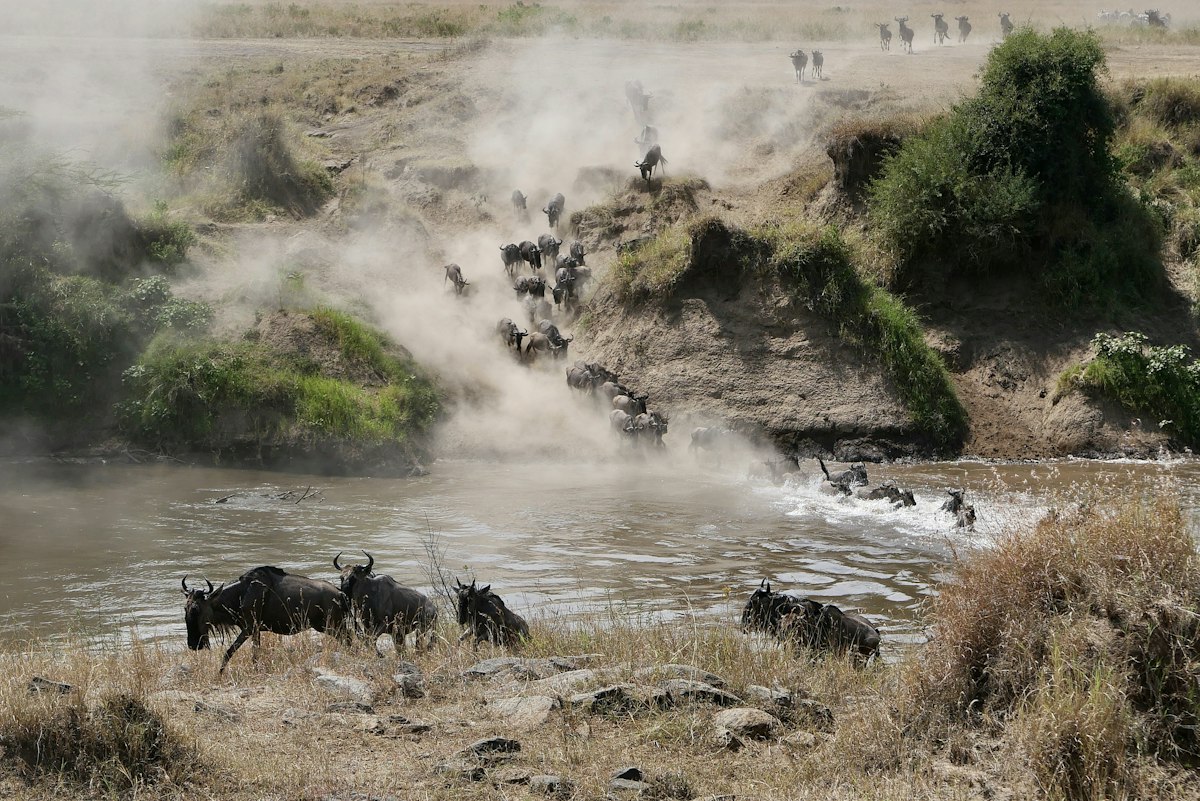
The Grzimeks approached the problem with a genuinely novel method for the time: systematic aerial counts using two small aircraft, flying coordinated survey patterns over the Serengeti to track herd numbers and movement directly rather than relying on ground-level estimates. Their results overturned the previous assumptions immediately — the large-animal population came in at roughly 367,000, sharply down from an earlier estimate of over a million, and the aerial vantage point let them map migration routes with a precision no ground survey could have matched.
A Film That Built a National Park
The Grzimeks turned their research into both a book and a documentary film, Serengeti Shall Not Die, released in 1959 — a genuine campaign film built directly from the survey data, arguing for the ecosystem's protection based on what the aerial counts had actually revealed. The film went on to win the Academy Award for Best Documentary Feature in 1960, and its influence extended well beyond a trophy: alongside the companion book, it directly contributed to the creation of Serengeti National Park as a protected area, rather than the fenced, subdivided landscape the earlier proposals had envisioned.
An Imperfect Legacy, Still Foundational
The Grzimeks' migration research wasn't perfect — later study showed the herds did, in fact, linger in the compensatory northern areas the original proposal had set aside, meaning some of their specific conclusions didn't hold up. But the core achievement stands: one of the first systematic scientific studies of the migration, conducted from the air at a moment when the ecosystem's fate was still genuinely undecided, and a direct link between that research and the protected status the Serengeti holds today — the same protection that makes the modern migration safaris possible at all.
Frequently Asked Questions
Who first scientifically studied the Great Migration?
Bernhard Grzimek and his son Michael, a German zoologist and his son, who conducted aerial survey counts of the Serengeti starting in 1957 after being invited by national park administrators.
What was Serengeti Shall Not Die?
A 1959 documentary film and companion book by Bernhard and Michael Grzimek, built from their aerial migration research, which won the 1960 Academy Award for Best Documentary Feature and directly contributed to the creation of Serengeti National Park.
Was the Serengeti nearly fenced off?
Proposals to fence parts of the Ngorongoro area were circulating in the 1950s, based on inaccurate population and migration estimates — the Grzimeks' aerial survey research helped establish the case against that approach.

Travel Guides Finder Editorial Team
Editorial Team
Articles on Travel Guides Finder are researched and written by our small editorial team. We check dates, prices and entry rules against official sources such as tourism boards, event organisers and government travel advice, and we update guides when those sources change. If you spot an error, please let us know through our contact page.