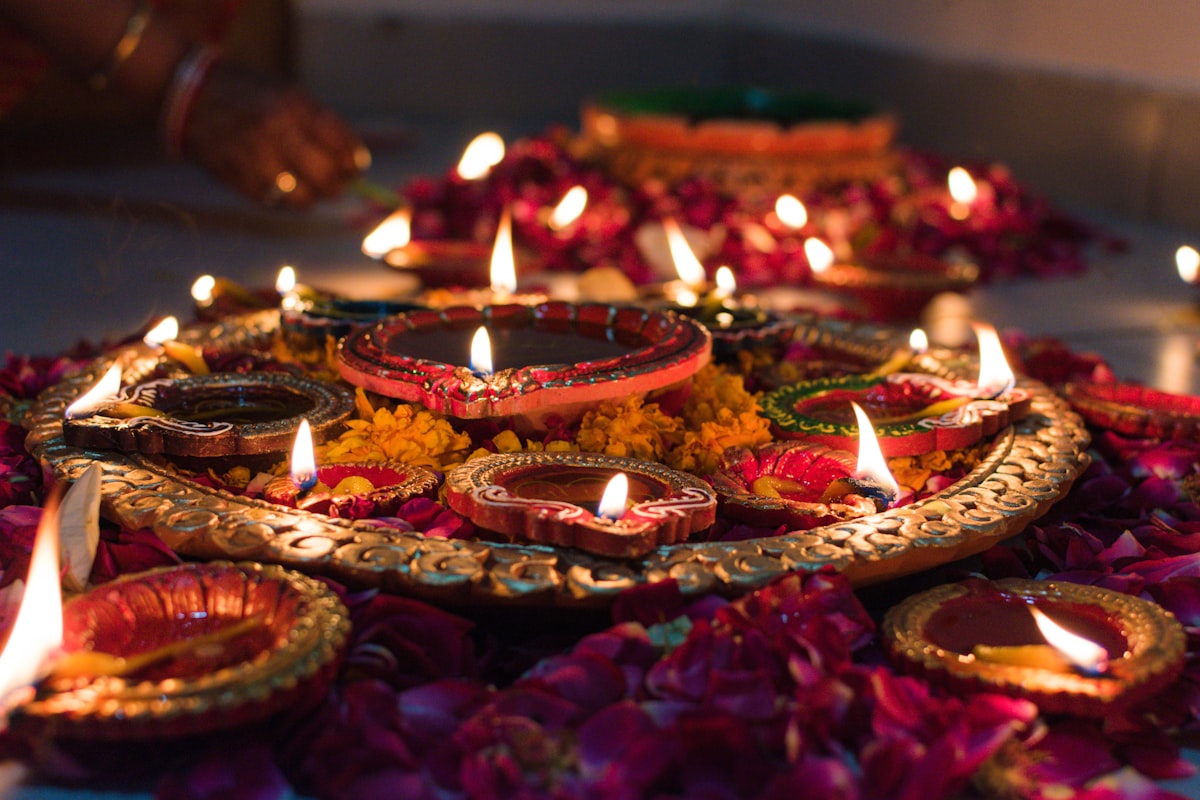
Diwali — from the Sanskrit Deepavali, 'row of lamps' — is the most widely celebrated festival in India and among the largest in the world, observed by Hindus, Sikhs, Jains and many Buddhists. Its date follows the Hindu lunisolar calendar, so it moves each year; in 2026 the main day of Diwali and Lakshmi Puja falls on Sunday, November 8. What surprises many visitors is that Diwali is not one story or one day. It is a five-day sequence, and different regions emphasise different legends.
The Stories Behind Diwali
Rama's return to Ayodhya
In much of north India, Diwali celebrates the return of Lord Rama, his wife Sita and his brother Lakshmana to Ayodhya after fourteen years of exile and the defeat of the demon king Ravana, as told in the Ramayana. According to tradition, the people of Ayodhya lit rows of oil lamps to welcome them home — the origin of the diyas that define the festival's look today.
Krishna and Narakasura
In south India, the emphasis is often on Krishna's victory over the demon Narakasura, which is remembered on Naraka Chaturdashi, the day before the main Diwali night. Many families in the south rise before dawn for a ritual oil bath on this day.
Lakshmi, goddess of prosperity
Across India, the main Diwali night is devoted to Lakshmi, the goddess of wealth and good fortune. Homes are cleaned and decorated so that she will enter, doors and windows are left open, and Lakshmi Puja is performed in the evening. For many businesses, Diwali also marks the start of a new financial year, and new account books are blessed.
The Five Days of Diwali in 2026
| Day | 2026 Date | What It Marks |
|---|---|---|
| Dhanteras | Friday, November 6 | Wealth and prosperity; buying gold, silver or new utensils |
| Naraka Chaturdashi (Choti Diwali) | Saturday, November 7 | Krishna's victory over Narakasura |
| Diwali & Lakshmi Puja | Sunday, November 8 | The main night: lamps, puja, fireworks |
| Govardhan Puja | Monday, November 9 | Krishna lifting Govardhan hill; gratitude for nature |
| Bhai Dooj | Following day (varies by region) | The bond between brothers and sisters |
Exact muhurat (auspicious) timings for Lakshmi Puja differ from city to city, and some regions shift Govardhan Puja and Bhai Dooj by a day depending on the lunar calendar. If you are attending a puja, ask your hosts or check a local panchang.
Not Only a Hindu Festival
Sikhs mark the same period as Bandi Chhor Divas, commemorating the release of Guru Hargobind from imprisonment, and the Golden Temple in Amritsar is lit up spectacularly. Jains observe Diwali as the anniversary of Mahavira's attainment of moksha. The shared imagery of light makes Diwali a genuinely pan-Indian occasion.
Where to Experience Diwali
Ayodhya now holds a vast lamp-lighting ceremony on the banks of the Sarayu River. Varanasi celebrates Dev Deepawali about two weeks after Diwali, when the ghats are lined with thousands of lamps. Jaipur's bazaars are famous for their illuminated streets, and Amritsar's Golden Temple is one of the most moving places to spend the night. Outside India, Leicester in the UK hosts one of the largest Diwali celebrations outside the subcontinent, and Singapore's Little India is decorated for weeks.
Travel tip: Diwali is India's busiest domestic travel period. Trains and flights sell out weeks ahead and hotel prices rise, especially in Jaipur, Varanasi and Ayodhya. Expect air quality to worsen in north Indian cities around Diwali night, and pack a mask if you are sensitive to smoke.
Etiquette for Visitors
- Remove your shoes before entering a home or temple where puja is being performed.
- If invited to a family's Diwali, a box of sweets (mithai) or dried fruit is the customary gift.
- Many families wear new clothes on Diwali; dressing smartly is appreciated.
- Greet people with 'Happy Diwali' or 'Shubh Deepavali'.
- Be careful around fireworks in crowded streets — they are set off everywhere on the main night.
Frequently Asked Questions
When is Diwali in 2026?
The main day of Diwali and Lakshmi Puja is Sunday, November 8, 2026. The five-day festival begins with Dhanteras on Friday, November 6.
Why does the date of Diwali change every year?
Diwali follows the Hindu lunisolar calendar and falls on the new moon (amavasya) of the month of Kartika, so its Gregorian date moves between mid-October and mid-November.
What does Diwali mean?
Diwali comes from the Sanskrit Deepavali, meaning 'row of lamps'. It symbolises the victory of light over darkness and good over evil.

Travel Guides Finder Editorial Team
Editorial Team
Articles on Travel Guides Finder are researched and written by our small editorial team. We check dates, prices and entry rules against official sources such as tourism boards, event organisers and government travel advice, and we update guides when those sources change. If you spot an error, please let us know through our contact page.